
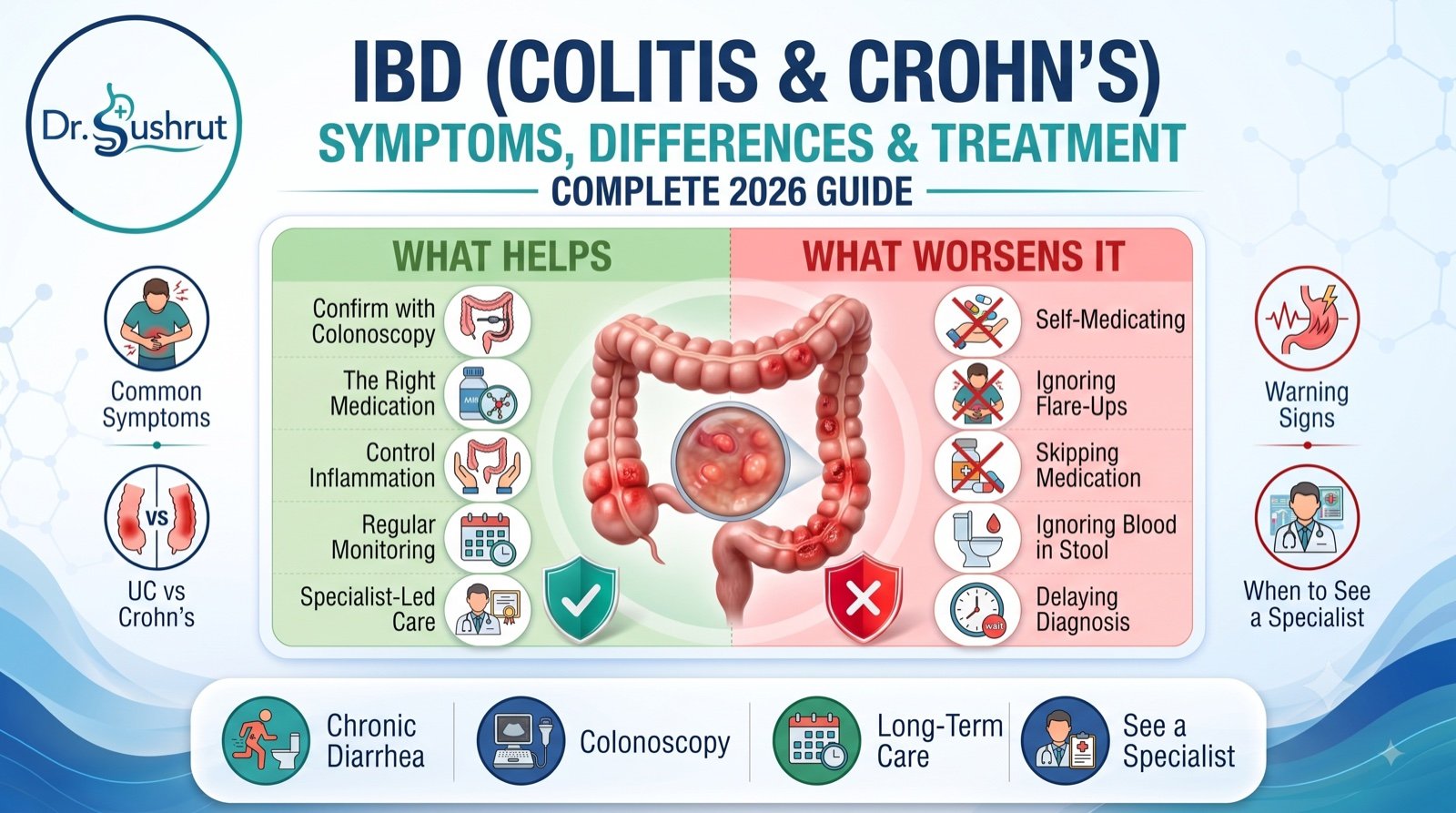
Diarrhoea that keeps coming back for weeks, cramping stomach pain, and – the symptom that should never be brushed aside – blood in the stool are not something to keep treating as an ordinary “stomach upset”. When bowel symptoms persist for weeks or months, one important possibility is inflammatory bowel disease, or IBD, a long-term condition in which the immune system inflames the gut. It is frequently confused with IBS, but the two are very different, and telling them apart changes everything about treatment. A clear medical overview is available from the US National Institute of Diabetes and Digestive and Kidney Diseases.
This guide, written to reflect how a DM Gastroenterology specialist approaches IBD, explains what it is, how ulcerative colitis and Crohn’s disease differ, the symptoms and warning signs, and how it is diagnosed and treated.
Key Takeaways
- IBD is long-term inflammation of the digestive tract driven by the immune system; its two main forms are ulcerative colitis and Crohn’s disease.
- It is not the same as IBS – IBD causes actual inflammation and damage, and can show up on tests, whereas IBS does not.
- Common symptoms are persistent diarrhoea, abdominal pain, blood in the stool, fatigue and unintended weight loss.
- Blood in the stool, high fever or severe pain should be assessed promptly, not treated at home.
- IBD cannot be cured, but modern treatment controls the inflammation well and lets most people live full, active lives.
What is IBD?
In inflammatory bowel disease, the immune system mistakenly attacks the lining of the digestive tract, causing inflammation, ulcers and, over time, damage. This is a genuine, measurable process – quite unlike the gut-sensitivity of irritable bowel syndrome.
Inflammatory bowel disease (IBD) – a group of conditions in which the immune system causes chronic inflammation of the gut. The two main types are ulcerative colitis, which affects the large intestine, and Crohn’s disease, which can affect any part of the digestive tract.
The distinction from IBS matters because the treatments are entirely different. Where irritable bowel syndrome is managed with diet and symptom relief, IBD needs medication that calms the immune inflammation, and it requires ongoing specialist care to prevent complications.
Ulcerative colitis versus Crohn’s disease
Both are forms of IBD, but they behave differently, and knowing which one is present guides treatment.
| Feature | Ulcerative colitis | Crohn’s disease |
|---|---|---|
| Where it affects | The large intestine (colon and rectum) only | Any part of the gut, mouth to anus |
| Pattern of inflammation | Continuous, in the inner lining | Patchy, and can go through the full bowel wall |
| Typical clue | Bloody diarrhoea and urgency | Pain, weight loss, sometimes with less bleeding |
Symptoms of IBD
IBD symptoms tend to come in flare-ups with quieter periods in between, and often include:
- Persistent or recurring diarrhoea, sometimes with urgency or waking at night to pass stool.
- Cramping abdominal pain, often in the lower abdomen.
- Blood or mucus in the stool.
- Fatigue, reduced appetite, unintended weight loss, and sometimes fever.
IBD can also cause symptoms outside the gut, such as joint pains, mouth ulcers or eye and skin problems, which is one reason it needs a specialist to join the dots.
Warning signs that need prompt care
Seek medical care promptly for any of these
Blood in the stool, or black, tarry stool
Severe abdominal pain or marked abdominal swelling
High fever with the bowel symptoms
Persistent vomiting, dehydration or rapid weight lossAny bleeding from the gut deserves assessment rather than home treatment – it is the symptom most often wrongly dismissed.
How IBD is diagnosed
Because IBD causes real inflammation, it can be confirmed with tests – which is also how it is separated from IBS. Blood tests look for inflammation and anaemia, and a stool test can detect inflammation in the gut. The key investigation is a colonoscopy, which lets the specialist see the inflamed lining directly and take biopsies to confirm the diagnosis and its type. Scans are sometimes added to map how much of the gut is involved, particularly in Crohn’s disease.
| Test | What it shows | Why it is used |
|---|---|---|
| Blood and stool tests | Inflammation and anaemia | First-line clues that point to IBD over IBS |
| Colonoscopy with biopsy | The inflamed lining, directly, plus tissue samples | Confirms the diagnosis and the type |
| Cross-sectional scans | How much of the gut is involved | Especially in Crohn’s disease |
Treatment: controlling the inflammation
IBD cannot yet be cured, but it can be controlled very effectively, and the goal of treatment is to calm active inflammation and then keep the disease in remission long term. Medication is the mainstay, chosen according to the type and severity – ranging from anti-inflammatory drugs for milder disease to medicines that modulate the immune system and, for more active disease, targeted biologic therapies. Flare-ups are settled and then a maintenance plan keeps symptoms away, with regular monitoring to check the gut is healing and to watch for complications, including a small long-term rise in bowel cancer risk that makes surveillance colonoscopy important. Surgery is needed in some cases, particularly for complications. Because IBD is lifelong and the medicines need careful selection and monitoring, it is best managed in an ongoing partnership with a specialist rather than treated in isolation, so anyone with persistent bowel symptoms should arrange a proper evaluation.
Future trends in IBD care
IBD treatment has advanced rapidly. A growing range of biologic and targeted medicines now controls disease that once resisted treatment, and the aim has shifted from merely easing symptoms to healing the gut lining, which improves long-term outcomes. Better tools for monitoring inflammation without repeated invasive tests are making it easier to keep disease in check, and research into the gut microbiome and personalised treatment continues. For most people today, IBD is a manageable long-term condition rather than a disabling one.
Conclusion
IBD is a lifelong condition, but it is also a very treatable one, and separating it from IBS is the first crucial step. Persistent diarrhoea, cramping pain and especially blood in the stool over weeks are not an ordinary upset stomach and deserve proper assessment. With the right diagnosis and modern treatment, the inflammation can be brought under control and kept there, allowing a full and active life.
Diarrhoea, cramping or blood in the stool that has lasted weeks?
Dr. Sushrut Singh, a DM Gastroenterology specialist, distinguishes IBD from IBS with the right tests, confirms the diagnosis on colonoscopy, and builds a treatment plan that controls the inflammation long term. Consultations are at the Gaur City clinic in Greater Noida West, with colonoscopy available at Fortis Hospital, Sector 62.
Call or WhatsApp +91 93153 54431 to have persistent bowel symptoms assessed. Blood in the stool should never be ignored.
Frequently Asked Questions (FAQs)
What is the difference between IBD and IBS?
IBD (inflammatory bowel disease) causes real inflammation and damage to the gut that shows up on tests, and it needs medication to control the immune response. IBS (irritable bowel syndrome) is a disorder of gut function without that inflammation, managed mainly with diet and symptom relief.
Can IBD be cured?
Not yet, but it can be controlled very well. Modern treatment settles flare-ups and keeps the disease in remission, so most people live full, active lives with regular specialist follow-up.
Is blood in the stool always serious?
It always deserves assessment. It can come from something minor like piles, but it can also signal IBD or other conditions, so persistent or repeated bleeding should be checked by a specialist rather than assumed to be harmless.
Which is worse, ulcerative colitis or Crohn’s disease?
Neither is simply “worse” – they differ in where and how they affect the gut, and severity varies from person to person. Both are treatable, and the treatment is tailored to the type and how active the disease is.
Does IBD increase the risk of bowel cancer?
Long-standing IBD affecting the colon carries a modest increase in bowel cancer risk over many years, which is why regular surveillance colonoscopy is part of ongoing care. Good control of inflammation helps reduce that risk.