
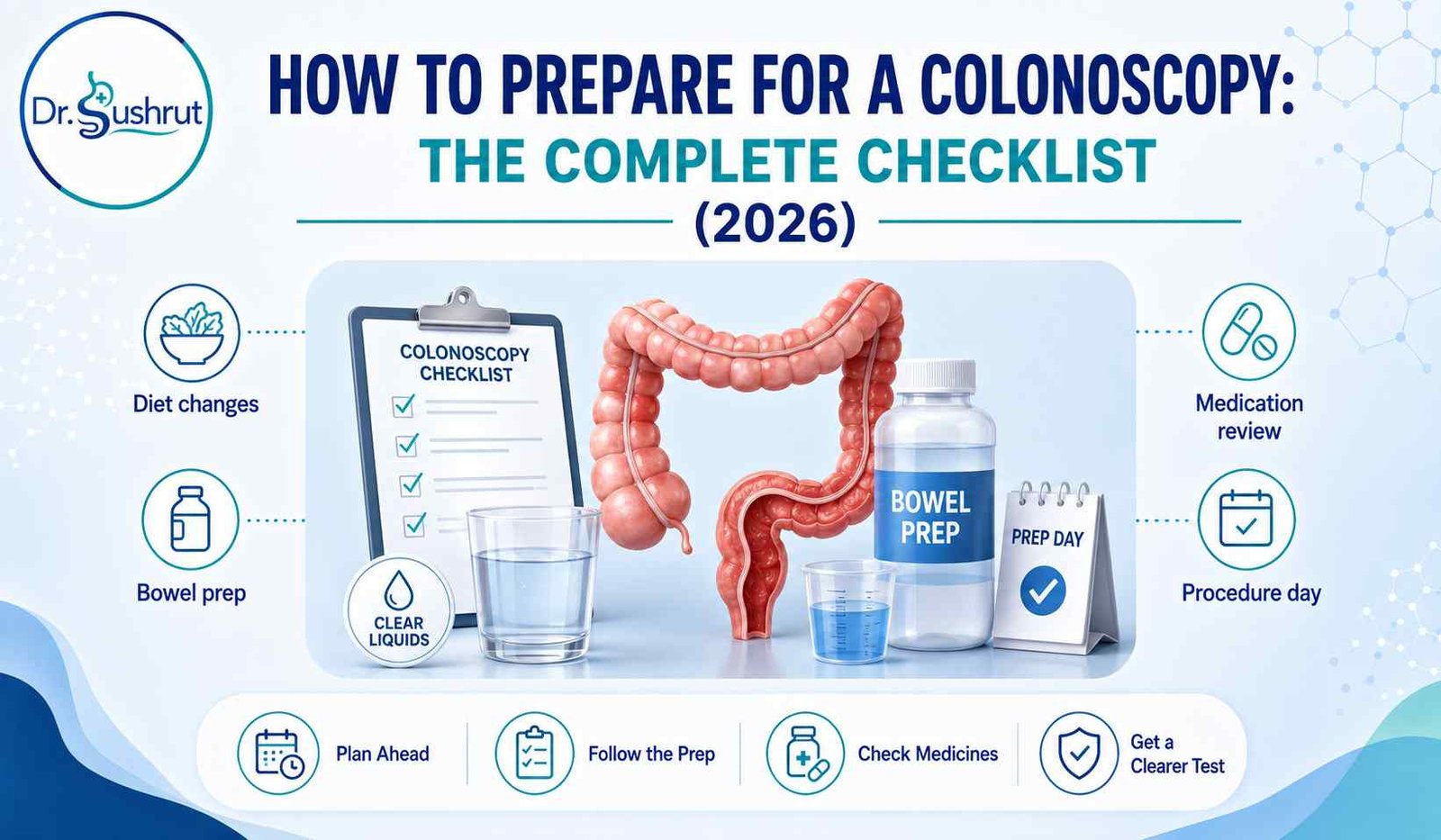
Most first-time colonoscopy patients say the same thing after the procedure – the prep was harder than the procedure itself. Not because the prep is genuinely difficult, but because generic instructions rarely translate well to what an Indian patient actually eats and how an Indian family kitchen actually operates. According to data published on PMC NCBI, the quality of bowel preparation is the single strongest determinant of colonoscopy accuracy – a poorly prepped colon means missed polyps, missed early cancers, and often a repeat procedure. Good prep is not optional; it is what makes the procedure worth doing.
This guide is written specifically for Indian patients preparing for their first colonoscopy. It covers the three days before, the full day before, the night before, the morning of the procedure, and the specific Indian dietary substitutions that make the prep genuinely manageable rather than an exercise in Western-diet guesswork. Every recommendation here can be adjusted for your specific medical situation – talk to your specialist about your exact protocol before starting.
Key Takeaways
- Bowel preparation quality determines whether the colonoscopy accurately detects polyps and early lesions.
- Prep starts 3 days before the procedure with dietary changes, intensifies 24 hours before with clear fluids, and culminates with the PEG solution the evening before.
- Indian dietary staples need specific substitutions during prep – the standard Western instructions do not translate directly.
- Hydration during prep is critical – inadequate fluid intake makes the prep harder and less effective.
- Bring an escort, wear loose comfortable clothing, and plan for a full recovery day after the procedure.
Understanding Why Bowel Preparation Matters So Much
A colonoscopy is essentially a visual inspection of the inner lining of the entire large intestine. Anything blocking that view – stool residue, undigested food particles, fibre, seeds – creates blind spots where small polyps or early lesions can hide. A properly prepared colon has a completely clear, water-only view of the mucosa; a poorly prepared colon has patchy visibility that forces the specialist to either repeat the procedure or accept missed pathology. The prep protocols look demanding because they are designed to give the specialist the clearest possible field of view. Cutting corners on prep is essentially paying for a procedure and then reducing its value.
The 3-Day Preparation Timeline
Here is the practical timeline most gastroenterologists follow for a standard colonoscopy prep. Your specialist may modify this based on your specific case:
| Day Before Procedure | What To Do |
|---|---|
| Day -3 (3 days before) | Start avoiding seeds, nuts, and high-fibre foods. Continue normal diet otherwise. |
| Day -2 (2 days before) | Continue seed-free, low-fibre diet. Increase water intake. Stop iron supplements. |
| Day -1 (24 hours before) | Full clear liquid diet only. Start PEG prep solution in the evening as directed. |
| Day 0 morning | Continue clear fluids only. Second dose of PEG solution 4-6 hours before procedure. |
| Day 0 procedure time | Nothing by mouth for 2 hours before scheduled time. Bring escort. |
| Day 0 evening | Normal light diet. Rest. Sedation effect wears off completely. |
Getting the protocol matched to your specific case matters. Consulting the Best Gastroenterologist in Greater Noida beforehand ensures you receive prep instructions tailored to your medical history – existing kidney or heart conditions may require modified fluid volumes, diabetes may need adjustment of morning medications, and blood thinners will need a specific stop-and-restart schedule. A generic prep sheet downloaded from the internet cannot account for these factors, and getting them wrong is more consequential than getting the fibre restrictions wrong. This is a five-minute conversation that prevents a lot of last-minute confusion.
Indian Diet Substitutions for the 3-Day Low-Fibre Phase
This is the section most generic guides skip – and it is what actually determines whether prep succeeds or fails for Indian patients. Standard prep instructions were written for Western diets and do not translate directly. Here are the substitutions that actually work:
Foods to avoid completely from Day -3:
- Whole grains, brown rice, wheat rotis, chapati made from whole wheat atta
- Dal with skin (chilka dal, whole moong, rajma, chana, chickpeas)
- Raw vegetables, salad, cabbage, cauliflower, broccoli, palak
- All fruits with skin or seeds (apples with skin, guava, pomegranate, chikoo, kiwi)
- Nuts and seeds (almonds, cashews, walnuts, jeera, saunf, methi, sesame, flax)
- Coconut in any form, including chutney
- Corn, popcorn, and any preparation containing corn
Foods that are allowed on the low-fibre phase:
- White rice, refined maida rotis, plain white bread
- Skinned split dals (moong dal, arhar dal, masoor dal – all in strained form)
- Cooked and strained vegetables (potato, bottle gourd, ridge gourd, ash gourd)
- Peeled and cored fruits (banana, papaya without seeds, watermelon flesh only)
- Curd and paneer in moderation
- Plain omelette, boiled eggs, poached fish (avoid fried preparations)
For understanding the practical cost side of the procedure you are prepping for, the Colonoscopy Cost in Greater Noida guide breaks down what a standard diagnostic colonoscopy costs versus one with polypectomy, what health insurance typically covers under day-care benefits, and what the total out-of-pocket range looks like. Reviewing this before the procedure lets you plan financially and reduces one source of stress on prep day. Most colonoscopies fall within the day-care insurance benefit; confirm inclusions with your TPA before booking.
The 24-Hour Clear Liquid Phase
The day before the procedure is the hardest part for most patients. From the morning of Day -1, no solid food at all. Only clear liquids for the full 24 hours before the procedure. What counts as a clear liquid:
- Plain water
- Clear vegetable broth (strained, no vegetables)
- Coconut water (in moderation)
- Clear fruit juices with no pulp (apple juice, white grape juice)
- Plain black tea or clear black coffee (no milk, no cream)
- Nimbu paani without pulp
- Isabgol water if constipation-prone
- Lemon-based electrolyte drinks (no colouring)
Avoid anything with dark colour that might resemble blood in the colon (red or purple drinks, tomato juice, beetroot juice), anything with milk or cream, anything with pulp or solid pieces, and any dairy or dairy-based drinks including lassi and buttermilk. Even coloured hard candies or lozenges should be avoided during this window, as their dyes can also confuse the endoscopic examination the following day.
Understanding what the procedure itself involves helps most patients get through the harder prep hours with less anxiety and more compliance. The dedicated Colonoscopy in Greater Noida page covers exactly what happens during the scope itself – the sedation protocol, the specialist’s examination approach, polyp removal if any, biopsy taking if needed, and the recovery timeline. Reading it during the clear-liquid day gives you a clear mental picture of what all the prep is actually enabling, and removes most of the anticipatory anxiety that first-time patients experience.
How to Take the PEG Prep Solution
This is where most patients struggle. The PEG (polyethylene glycol) solution is what actually clears the colon, and it needs to be taken correctly:
Standard protocol: Mix the sachets in the specified volume of water (usually 1-2 litres) and drink 240 ml every 15-20 minutes over 2-3 hours. Do not try to drink it all at once – this causes nausea and vomiting.
Tips that make it easier:
- Refrigerate the mixed solution – it tastes significantly better cold
- Use a straw and drink from the back of the tongue to bypass some taste receptors
- Suck on a small piece of lemon or lime between glasses to reset the taste
- Follow each glass with a sip of plain cold water
- Walk around between doses – this actually helps the solution work better
Bowel movements will start within 1-2 hours of the first dose. The output should progressively become clearer, ending as clear yellow liquid. If output is still brown or contains solid matter by the time you go to bed, call your specialist – the prep may need to be extended.
Confused About the Prep Protocol for Your Specific Case?
The prep sheet you were handed at booking is a general guide. Your medications, existing conditions, and even your usual diet may require specific modifications. A five-minute call before you start clarifies most questions and prevents mid-prep panic.
Call Dr. Sushrut: +91 93153 54431
Warning Signs During Prep That Need a Call Back
Most prep goes smoothly with only mild discomfort. Contact your specialist if any of the following happens:
- Severe abdominal pain that is not just cramping from bowel movements
- Persistent vomiting that prevents you from finishing the prep solution
- Signs of dehydration (dizziness, dry mouth, very dark urine, no urination for 4+ hours)
- Rectal bleeding that is more than a small amount
- Fever or chills during the prep period
- Solid stool still passing 4 hours after the second prep dose
These are uncommon but treatable when caught during prep. Do not just push through – a modified plan or a rescheduled procedure is far preferable to arriving at the endoscopy suite inadequately prepared.
Future Trends: What’s Changing in 2026
Lower-volume PEG solutions (1 litre instead of 2) are becoming widely available in India, making the prep significantly less demanding for many patients. Split-dose protocols (half the previous evening, half in the morning) are being adopted more widely because they improve prep quality and are easier to tolerate. Some centres offer pre-prep counselling video calls to walk first-time patients through the process. For patients, the practical impact is that colonoscopy prep is getting shorter, more tolerable, and more consistently effective each year.
Conclusion
Colonoscopy preparation looks harder than it is, primarily because generic instructions do not account for Indian dietary patterns and family kitchen realities. Follow the 3-day timeline, use the Indian substitution table for the low-fibre phase, stay hydrated throughout, take the PEG solution in scheduled doses rather than all at once, and know when to call back if something is off. Do this and prep will be uncomfortable but manageable – and it will give the specialist the clearest possible view of your colon, which is what makes the procedure worth doing in the first place.
Your Indian Diet Prep Cheat Sheet
Print this or save it to your phone. Use it while your family cooks – it is easier than translating Western prep instructions on the fly:
| Standard Instruction | Indian Substitute |
|---|---|
| “Avoid seeds and nuts” | No jeera, saunf, methi dana, til, sunflower seeds, almonds, cashews, chia |
| “Avoid whole grains” | No whole wheat atta, brown rice, oats, ragi, bajra, jowar – use only maida or white rice |
| “Avoid raw vegetables” | No salad, cucumber, tomato, palak – all vegetables must be cooked and strained |
| “Avoid fruits with skin” | No apples with skin, guava, chikoo, pomegranate – only banana, watermelon flesh, papaya |
| “Avoid legumes with skin” | No chana, rajma, chickpea, chilka moong – only skinned split dals (moong, arhar, masoor) |
| “Avoid dairy on prep day” | No milk, curd, lassi, buttermilk, paneer for 24 hours before procedure |
| “Clear liquids only” | Plain water, coconut water (moderate), clear vegetable broth, black tea, nimbu paani without pulp |
| “Avoid red/purple foods” | No beetroot, jamun, red grape juice, tomato-based drinks – can be mistaken for blood in the colon |
Keep the sheet on the fridge. It removes 90% of the prep-day confusion.
Frequently Asked Questions (FAQs)
Can I take my regular medications during colonoscopy prep?
Most medications continue with a small sip of water on prep day. Exceptions include blood thinners (need to be stopped 3-7 days before, per specialist instructions), iron supplements (stop 5 days before), and diabetes medications (may need dose adjustment on prep day). Bring your full medication list to the pre-procedure consultation and confirm the exact schedule for each. Do not stop essential medications on your own without checking.
What happens if I cannot finish the entire prep solution?
Try to finish as much as you can – the effectiveness depends on the total volume. If you are actively vomiting or the prep is genuinely intolerable, call the clinic before continuing. Sometimes an anti-nausea medication can help; other times a lower-volume prep option is available. Arriving with incomplete prep usually means the procedure will find nothing useful and needs repeating – which is far more work than pushing through the prep.
How do I know if my prep is adequate before the procedure?
The output should be clear yellow liquid by the time you go to bed the evening before, or clear water-like liquid by morning after the split dose. If you are still passing brown stool or solid matter after both doses, the prep is inadequate and you should call the clinic. Some centres allow an extra dose or a rescheduled procedure; do not just show up hoping it will be fine.
Can I eat after the procedure is done?
Yes, once you are fully awake and have passed some gas. Start with light foods like khichdi, plain rice with dal, boiled eggs, or a soft chapati with curd. Avoid heavy oily meals, spicy food, or alcohol for 24 hours. Most patients return to normal diet by the evening of the procedure day. Biopsy results, if taken, come back within 5-7 days.
Book Your Consultation at Either Location
Both clinics offer the same specialist evaluation and procedural expertise. Choose the location most convenient for you:
Gaur City Clinic – Greater Noida West
Fortis Hospital – Sector 62
Same specialist. Same standards. Your choice of location.