
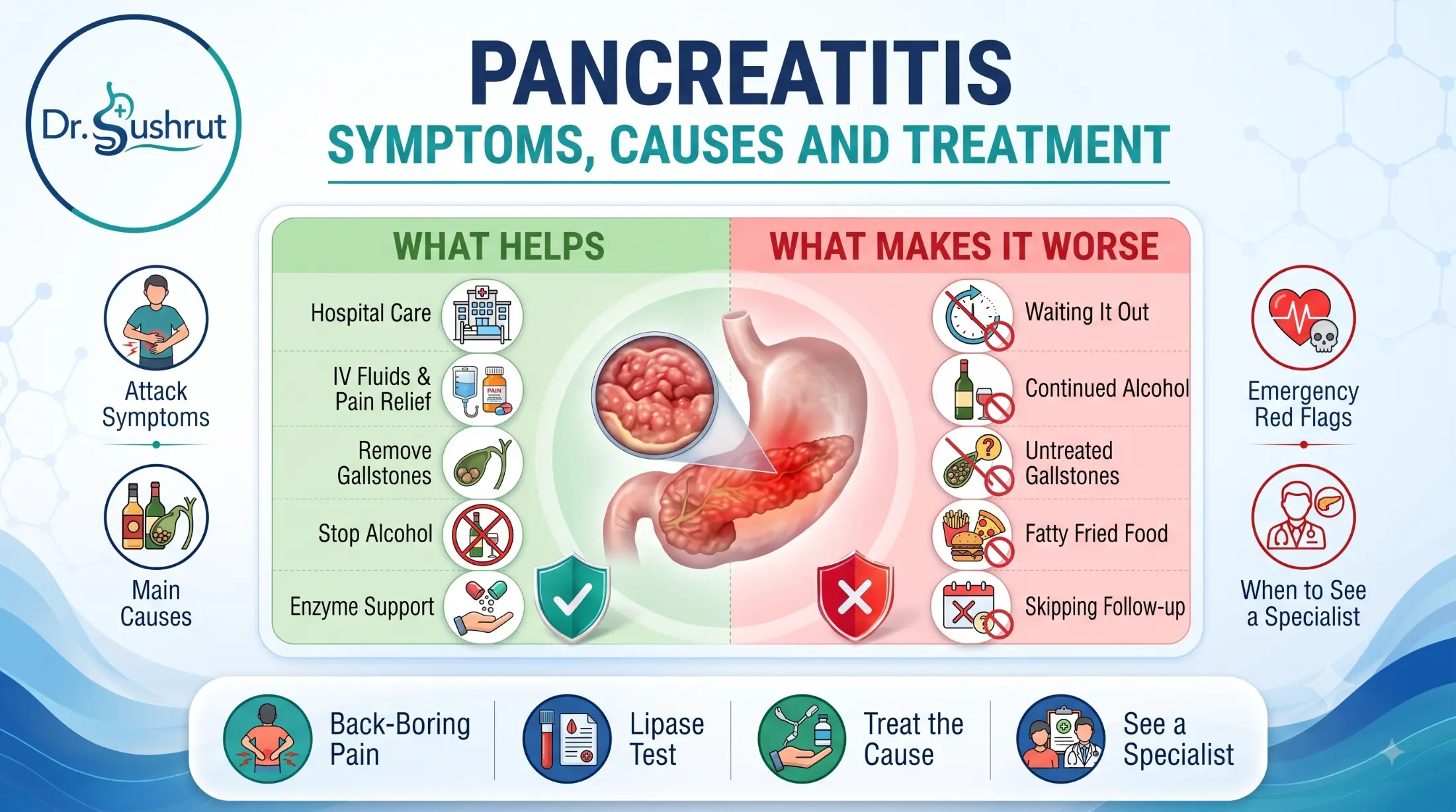
A severe, boring pain high in the abdomen that drills straight through to the back, comes on suddenly, and gets worse when you lie flat or eat is one of the most alarming symptoms in digestive medicine – and one of the most important not to wait out at home. It often means the pancreas, the organ that makes digestive juices and insulin, has become acutely inflamed. Pancreatitis can be a short, severe illness or a slow, grinding long-term condition, and the two most common causes – gallstones and alcohol – are the same ones behind much other abdominal disease. A clear overview is available from the US National Institute of Diabetes and Digestive and Kidney Diseases.
This guide, written to reflect how a DM Gastroenterology specialist approaches pancreatitis, explains what it is, the difference between acute and chronic disease, the symptoms and warning signs, what causes it, and how it is treated.
Key Takeaways
- Pancreatitis is inflammation of the pancreas; it can be acute (sudden and short) or chronic (long-term and progressive).
- The two leading causes are gallstones and alcohol; high triglycerides and certain medicines are less common causes.
- The hallmark symptom is severe upper-abdominal pain that spreads to the back and worsens after eating.
- Acute pancreatitis is a medical emergency – it is treated in hospital, not at home.
- Chronic pancreatitis can lead to poor digestion, weight loss and diabetes, and needs long-term specialist care.
What is pancreatitis?
The pancreas sits behind the stomach and does two vital jobs: it makes the enzymes that digest food and the hormones, including insulin, that control blood sugar. In pancreatitis, those powerful digestive enzymes become active while still inside the pancreas and begin to inflame and injure the organ itself.
Pancreatitis – inflammation of the pancreas that occurs when its own digestive enzymes activate too early and start to damage the gland. Acute pancreatitis is a sudden episode that can range from mild to life-threatening; chronic pancreatitis is lasting damage from repeated or ongoing inflammation.
Because the pancreas lies deep in the abdomen, its pain is felt centrally and bores through to the back. This depth is also why the illness can be more serious than it first appears, and why sudden severe pancreatic pain should be assessed in hospital rather than treated as ordinary indigestion.
Acute versus chronic pancreatitis
The two forms behave very differently and need different care.
| Type | What happens | Typical course |
|---|---|---|
| Acute pancreatitis | A sudden episode of inflammation, often from a gallstone or a bout of heavy drinking | Usually settles with prompt hospital treatment; can be severe and needs urgent care |
| Chronic pancreatitis | Repeated or continuous inflammation that permanently damages the gland | Long-term pain, poor digestion, weight loss and sometimes diabetes |
Symptoms of pancreatitis
The pain is the dominant symptom, but the details differ between the acute and chronic forms:
- Severe pain in the upper-middle abdomen that spreads to the back, often worse after eating or when lying flat.
- Nausea and vomiting, and a tender, sometimes swollen abdomen.
- In chronic disease, greasy, pale, foul-smelling stools that float, from poorly digested fat.
- Ongoing weight loss despite eating, and eventually the thirst and fatigue of new diabetes.
Warning signs that need emergency care
Go to a hospital immediately if you have
Sudden, severe upper-abdominal pain that will not ease
Pain with persistent vomiting and an inability to keep fluids down
Fever, a racing heartbeat, or breathlessness with the pain
Yellowing of the eyes or skin alongside the painAcute pancreatitis can worsen quickly and needs fluids, monitoring and treatment that are only possible in hospital. It is not a condition to manage with home remedies.
What causes pancreatitis
Two causes stand well ahead of the rest. Gallstones are a leading trigger of acute pancreatitis: a stone slips out of the gallbladder and blocks the shared drainage channel, backing up the pancreas – which is one more reason that symptomatic gallstones are worth treating rather than ignoring. Alcohol is the other major cause and the main driver of chronic pancreatitis, where repeated inflammation gradually scars the gland. Less common causes include very high triglyceride levels in the blood, certain medicines, high calcium, some inherited conditions, and injury. Identifying the cause is essential, because preventing the next attack depends entirely on it – removing the gallbladder, for instance, or stopping alcohol completely.
How pancreatitis is diagnosed
Diagnosis combines blood tests and imaging. Blood levels of the pancreatic enzymes amylase and lipase rise sharply in acute pancreatitis and help confirm it. An ultrasound looks for gallstones as the cause, while a CT scan shows how inflamed or damaged the pancreas is and picks up complications. Where a bile-duct stone is blocking the pancreas, a specialised endoscopic procedure can find and clear it.
| Test | What it shows | When it is used |
|---|---|---|
| Amylase and lipase (blood) | Enzymes released by an inflamed pancreas | To confirm acute pancreatitis |
| Ultrasound | Gallstones as a cause | Early, to find a treatable trigger |
| CT scan | Extent of inflammation and complications | In moderate or severe cases |
Treatment: settling the attack and preventing the next
Acute pancreatitis is treated in hospital. The core of early care is generous intravenous fluids, pain relief, control of nausea, and careful monitoring, with feeding restarted as soon as it is safe. Once the attack settles, attention turns to the cause: if gallstones were responsible, the gallbladder is removed to prevent a recurrence, often during the same admission, and a duct stone is cleared endoscopically. Chronic pancreatitis is a longer-term problem managed by stopping alcohol and smoking completely, controlling pain, replacing the digestive enzymes the damaged gland can no longer make, and treating the diabetes that often follows. Because pancreatitis can recur and cause lasting harm, anyone who has had an attack should have the cause properly investigated and treated; understanding the cost and pathway of pancreatitis treatment and choosing to follow up with a gastroenterologist are both part of preventing the next episode.
Future trends in pancreatitis care
Management has become more precise. Early, carefully judged fluid therapy and a move toward feeding patients sooner have improved recovery from acute attacks. Minimally invasive and endoscopic techniques now handle many complications that once required major surgery, and better enzyme replacement has improved daily life in chronic disease. Genetic testing is also clarifying why some people develop pancreatitis without the usual causes. The direction is toward gentler, earlier intervention and a stronger focus on removing the trigger so the illness does not return.
Conclusion
Pancreatitis sits at the serious end of digestive illness. Acute attacks are emergencies that belong in hospital, and the severe, back-boring pain that defines them should never be waited out. Chronic pancreatitis, meanwhile, quietly undermines digestion and can bring on diabetes. In both forms the decisive step is the same: find the cause – most often gallstones or alcohol – and deal with it, because that is what stops the next attack.
Had an attack of pancreatitis, or severe upper-abdominal pain that reaches the back?
Dr. Sushrut Singh, a DM Gastroenterology specialist, investigates the cause of pancreatitis, arranges gallstone or duct treatment where needed, and manages the pain, digestion and follow-up of chronic disease. Consultations are at the Gaur City clinic in Greater Noida West, with investigations and procedures supported at Fortis Hospital, Sector 62.
Call or WhatsApp +91 93153 54431 to have the cause assessed. For sudden, severe abdominal pain, go to the nearest emergency department first.
Frequently Asked Questions (FAQs)
Is pancreatitis a medical emergency?
Acute pancreatitis is – it needs hospital treatment with fluids and monitoring, because it can worsen quickly. Sudden, severe upper-abdominal pain that spreads to the back should be assessed in an emergency department, not at home.
What is the main cause of pancreatitis?
Gallstones and alcohol are the two leading causes. Gallstones commonly trigger acute attacks, while alcohol is the main driver of chronic pancreatitis. High triglycerides and certain medicines are less frequent causes.
Can pancreatitis be cured?
A single acute attack often settles fully once the cause is treated. Chronic pancreatitis causes permanent damage that cannot be reversed, but its symptoms and complications can be well managed with the right long-term care.
What foods should be avoided with pancreatitis?
Alcohol must be avoided completely, and very fatty, fried foods are best limited, especially in chronic disease. Your specialist will tailor advice to your situation, sometimes alongside enzyme supplements to aid digestion.
Does pancreatitis cause diabetes?
It can. Because the pancreas also makes insulin, long-standing chronic pancreatitis can damage that function and lead to diabetes, which is then managed as part of overall care.