
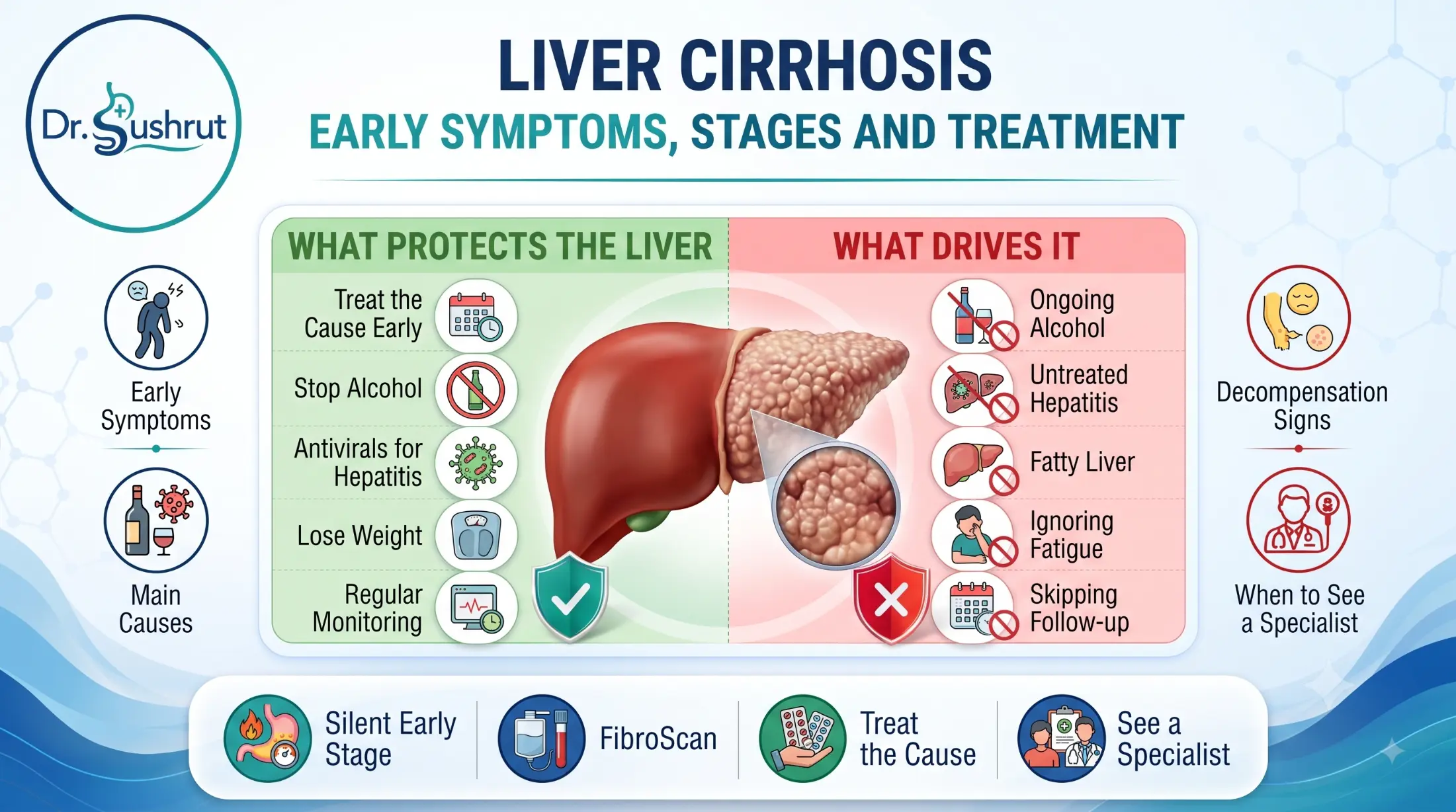
Liver cirrhosis has a reputation as a disease of heavy drinkers, but in India today the fastest-growing cause is something far more ordinary: fatty liver from an unbalanced diet and lifestyle. The liver is remarkably patient – it can be quietly scarring for years while blood tests look almost normal and the person feels well. By the time obvious symptoms appear, a lot of damage has often already been done, which is exactly why understanding the early, subtle stage matters so much. A clear medical overview is available from the US National Institute of Diabetes and Digestive and Kidney Diseases.
This guide, written to reflect how a DM Gastroenterology specialist assesses liver disease, explains what cirrhosis actually is, its stages, the early symptoms most people miss, the red flags that signal an emergency, and how the condition is managed to protect what liver function remains.
Key Takeaways
- Cirrhosis is advanced, long-term scarring of the liver caused by years of ongoing damage.
- The main causes are fatty liver disease, alcohol, and chronic hepatitis B or C.
- Early (compensated) cirrhosis often has few or no symptoms; fatigue and poor appetite may be the only clues.
- Jaundice, abdominal swelling, confusion or vomiting blood signal advanced (decompensated) disease and need urgent care.
- The scarring cannot be reversed, but treating the cause early can halt its progression and prevent serious complications.
What is liver cirrhosis?
Every time the liver is injured, it repairs itself, and each repair leaves a little scar tissue. When the injury goes on for years, the scarring spreads until it starts to replace healthy liver and interfere with how the organ works. That advanced stage of scarring is cirrhosis.
Cirrhosis – the end stage of long-term liver damage, in which widespread scar tissue replaces healthy liver and disrupts its ability to filter blood, make proteins and process nutrients. The scarring itself is permanent, but how far it progresses depends on whether the underlying cause is controlled.
The important point is that cirrhosis is the destination of a long journey, not a sudden event. It is usually preceded by years of a treatable condition such as fatty liver or hepatitis. Recognising the early signs of liver damage is what gives you the chance to step in before the scarring becomes advanced.
What causes cirrhosis
Cirrhosis is the shared end-point of several different diseases, and identifying which one is responsible is central to treatment. The most common causes are fatty liver disease, linked to weight, diabetes and diet and now rising sharply; long-term heavy alcohol use; and chronic infection with hepatitis B or hepatitis C. Less often it results from autoimmune liver disease, certain inherited conditions, or long-standing bile-duct problems. Because two or more of these can act together – fatty liver plus alcohol, for instance – a proper assessment looks for every contributing factor rather than assuming a single cause.
The stages: compensated and decompensated
Doctors think of cirrhosis in two broad stages, and the difference between them is enormous for how a person feels and what happens next.
| Stage | What is happening | How it feels |
|---|---|---|
| Compensated cirrhosis | The liver is scarred but still coping with its work | Often no symptoms, or only vague tiredness and poor appetite |
| Decompensated cirrhosis | The scarring overwhelms the liver’s reserve and it begins to fail | Jaundice, fluid swelling, confusion, bleeding – clear and serious symptoms |
The goal of treatment is to keep a person in the compensated stage for as long as possible – ideally for the rest of their life – by controlling whatever is driving the damage.
Early symptoms most people miss
In the early, compensated stage the signs are easy to dismiss:
- Persistent tiredness or a general lack of energy.
- Reduced appetite, mild nausea or unexplained weight loss.
- A dull discomfort in the upper-right abdomen.
- Easy bruising, or small spider-like blood vessels on the skin.
None of these is dramatic, and any one of them has many innocent explanations – which is precisely why cirrhosis is so often caught late. This is where simple blood work matters; learning how to read a liver function test can help you take an abnormal result seriously rather than filing it away.
Red flags that need urgent care
Seek immediate medical care for any of these
Yellowing of the eyes or skin (jaundice)
Swelling of the abdomen or both legs
Vomiting blood, or black, tarry stool
New confusion, drowsiness or disorientationThese are signs of decompensated cirrhosis – the liver struggling to keep up – and each one needs prompt specialist assessment.
How cirrhosis is diagnosed
Diagnosis usually combines blood tests, imaging and a measure of liver stiffness. Blood tests assess liver function and clotting and help identify the cause. A painless scan called a FibroScan measures how stiff – and therefore how scarred – the liver has become, often making a biopsy unnecessary; you can compare the two approaches in this guide to FibroScan versus liver biopsy. An ultrasound looks at the liver’s texture and screens for complications, and once cirrhosis is confirmed, regular surveillance for liver cancer and, where needed, an endoscopy to check for enlarged veins become part of ongoing care.
Treatment: protecting the liver you have
Because the scarring cannot be undone, treatment aims to stop it advancing and to manage any complications. The single most important step is removing the cause: complete abstinence from alcohol, antiviral treatment for hepatitis B or C, and steady weight loss and blood-sugar control for fatty liver. On top of this, complications are treated as they arise – fluid buildup, enlarged veins in the food pipe, and other effects each have specific management – and people with cirrhosis are monitored regularly for liver cancer, which is more common in a scarred liver. When the liver eventually fails despite everything, a transplant is the definitive treatment. Understanding the cost and stages of cirrhosis treatment helps in planning care, and the earlier a specialist is involved, the more liver function there is to protect – so it is worth choosing to see a gastroenterologist early rather than waiting for obvious symptoms.
Future trends in cirrhosis care
The outlook is improving on several fronts. Hepatitis C is now curable with a short tablet course, removing one major cause entirely, and better treatments for hepatitis B keep it well controlled. Non-invasive tests such as FibroScan are catching scarring earlier and sparing many people a biopsy, and a great deal of research is focused on slowing or reversing the fibrosis of fatty liver before it reaches cirrhosis. The consistent theme is early detection: the sooner the cause is treated, the more of the liver can be saved.
Conclusion
Cirrhosis is serious, but it is also the end of a long and largely preventable process. In its early stage it whispers rather than shouts, so vague tiredness or an abnormal liver test deserves attention rather than dismissal. The scarring itself is permanent, yet treating the underlying cause can hold the disease in its compensated stage for years. If you have fatty liver, a history of alcohol use, or hepatitis, a proper liver assessment is one of the most valuable check-ups you can have.
Worried about your liver, an abnormal LFT, or fatty liver that keeps being ignored?
Dr. Sushrut Singh, a DM Gastroenterology specialist, assesses the degree of liver scarring with tests such as FibroScan, identifies and treats the cause, and sets up the monitoring that keeps cirrhosis from advancing. Consultations are at the Gaur City clinic in Greater Noida West, with investigations supported at Fortis Hospital, Sector 62.
Call or WhatsApp +91 93153 54431 for a liver assessment. The earlier the cause is treated, the more liver you keep.
Frequently Asked Questions (FAQs)
Can liver cirrhosis be reversed?
The scarring of established cirrhosis cannot be reversed, but treating the cause can stop it progressing and keep the liver working. Earlier stages of liver scarring, before cirrhosis, can improve if the cause is addressed in time.
How long can you live with cirrhosis?
It varies widely. People with early, compensated cirrhosis who control the cause can live for many years in good health, while decompensated cirrhosis is more serious. Early diagnosis and treatment make the biggest difference.
Is cirrhosis only caused by alcohol?
No. Alcohol is one cause, but fatty liver disease and chronic hepatitis B or C are equally important, and fatty liver is now a leading cause in India. Many people with cirrhosis have never drunk heavily.
What are the first signs of cirrhosis?
Early cirrhosis often causes only vague tiredness, poor appetite or mild upper-right abdominal discomfort, and sometimes no symptoms at all. It is frequently picked up on a blood test or scan before symptoms appear.
Does fatty liver lead to cirrhosis?
It can, if left unchecked over many years, though most people with fatty liver never reach cirrhosis. Losing weight, controlling blood sugar and avoiding alcohol greatly reduce that risk.