
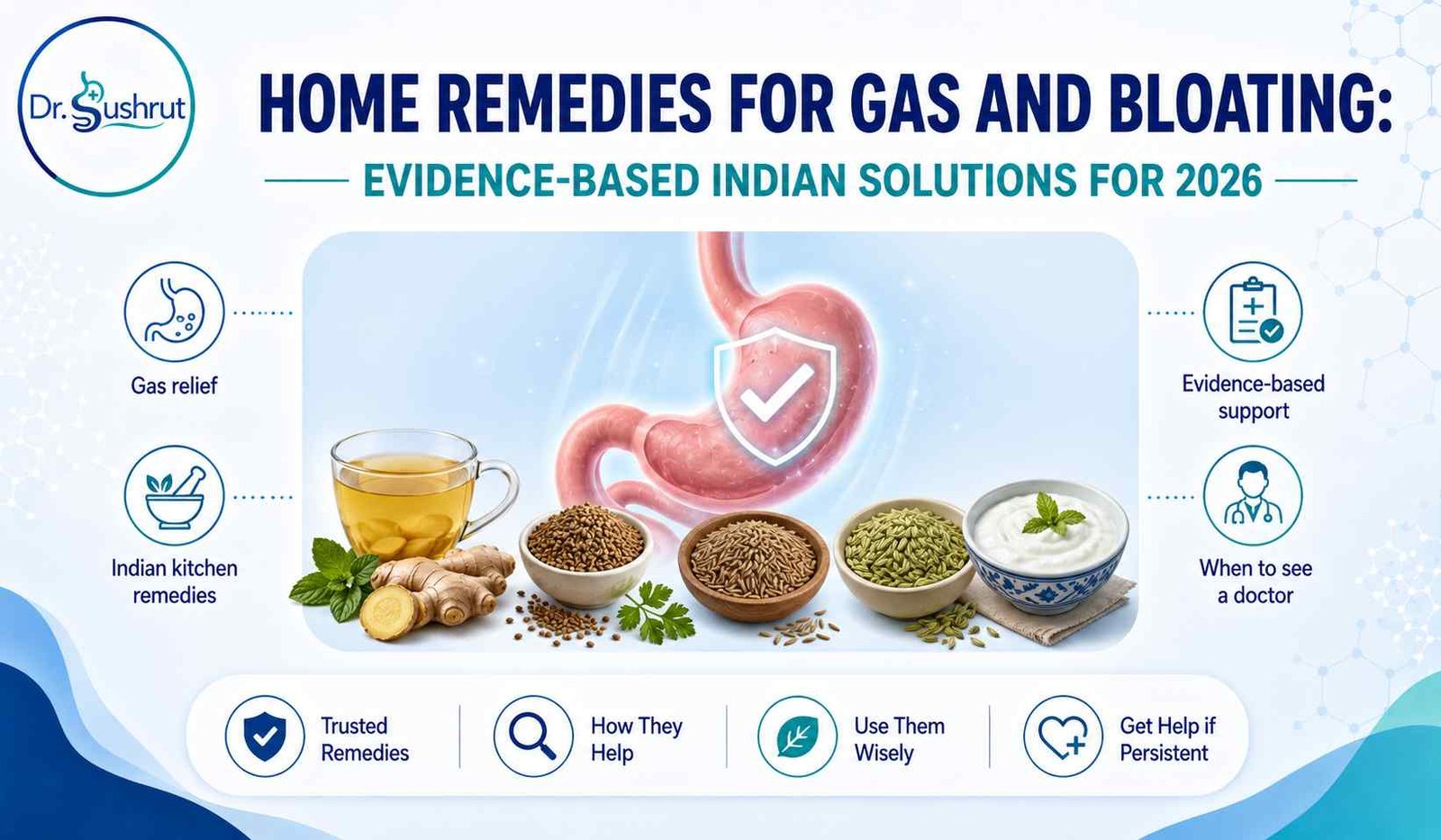
If your stomach feels tight, distended, or heavy after meals almost every day, you are not alone. Chronic bloating has become one of the most common complaints in Indian gastroenterology clinics. According to the Global Prevalence of Functional Gastrointestinal Disorders study by the World Gastroenterology Organisation, 49 percent of females and 36 percent of males worldwide meet criteria for at least one functional gastrointestinal disorder, with bloating being among the most reported symptoms.
This guide identifies the actual triggers behind chronic bloating in Indian diets, evaluates which traditional remedies genuinely work, and flags red-flag patterns that mean home remedies will not be enough. If you are dealing with daily gas or bloating, this guide gives you a clear starting point that respects both tradition and clinical evidence.
Key Takeaways
- Most Indian bloating is caused by dal soaking practices, dairy tolerance issues, and cruciferous vegetables
- Ajwain, hing, and jeera water are genuinely effective, but only for symptom relief not causes
- FODMAP-heavy Indian foods (rajma, chole, wheat, milk) drive most functional bloating
- Chewing gum, carbonated drinks, and eating too fast cause air-swallowing bloat
- Bloating with weight loss, altered bowel habits, or blood needs urgent specialist evaluation
What Gas and Bloating Actually Are
Bloating is the sensation of increased pressure or distension in the abdomen, usually caused by excess gas or altered gut motility. Functional dyspepsia and irritable bowel syndrome (IBS) are the two most common medical categories. Gas comes from three sources: swallowed air, bacterial fermentation of undigested carbohydrates in the colon, and byproducts of protein digestion. Understanding which source dominates in your case determines which remedy will actually work.
Most Indian patients treat all bloating identically. This is why the same set of remedies fails repeatedly. A patient with air-swallowing bloat from talking while eating needs a different approach than a patient with fermentation bloat from lentils.
Home Remedies Fact-Check: What Works for Which Type of Bloating
| Home Remedy | What It Actually Does | Works Well For |
|---|---|---|
| Ajwain water (post-meal) | Reduces gas fermentation; mild antispasmodic | Fermentation bloat |
| Hing (asafoetida) in dal | Genuinely reduces gas production from legumes | Lentil-triggered bloat |
| Jeera-saunf water | Improves gastric emptying | Post-meal fullness |
| Buttermilk with black salt | Provides probiotics; aids digestion | Post-meal bloat |
| Ginger tea | Prokinetic effect; reduces nausea | Slow gastric emptying |
| Lemon in warm water | Stimulates bile flow | Fatty meal bloat |
| Chewing gum | Adds swallowed air | Backfires, avoid |
| Carbonated drinks | Direct gas source | Actively worsens bloat |
| Peppermint capsules | Antispasmodic for IBS | Genuinely helpful for IBS |
| Fennel seeds after meals | Reduces bloating and gas | Safe, helpful |
| Yoga (pavanmuktasana) | Mechanically clears trapped gas | Immediate relief |
| Prune juice/isabgol | Osmotic laxative | Constipation-triggered bloat |
| Rajma or chole daily | Undigestible carbs ferment heavily | Root cause of most Indian bloating |
The centerpiece insight is that “bloating” is not one condition. It is at least three: air-swallowing, fermentation gas, and slow motility. The wrong remedy for your type will not just fail, it will worsen the pattern. If you have been treating chronic bloating with the same buttermilk-ajwain routine for months without progress, you likely need proper evaluation from a gastroenterologist in Gaur City Greater Noida to identify the actual mechanism. Sometimes the answer is a simple food elimination trial. Sometimes it is small intestinal bacterial overgrowth (SIBO) that needs targeted treatment.
Foods That Trigger Bloating in Indian Diets
Rajma and chole: The most common triggers. Contain oligosaccharides that human enzymes cannot break down. Bacteria ferment them and produce gas.
Whole wheat in excess: Fructans in wheat are a major bloating trigger. Roti at every meal may be worsening your symptoms.
Milk and paneer: Lactose intolerance is present in about 60 percent of Indian adults, often undiagnosed. Even small amounts of milk in chai can cause bloating.
Cruciferous vegetables: Cabbage, cauliflower, broccoli, gobi. High in raffinose which ferments in the colon.
Onion and garlic: Contain fructans. Common trigger for IBS patients but often unrecognized.
Carbonated drinks and beer: Direct gas load. Simply removing these often reduces bloating significantly.
Chewing gum and hard candies: Cause air swallowing and contain sugar alcohols that ferment.
Late-night heavy dinners: Give the gut too little time to process before sleep. Overnight fermentation results.
Most chronic bloating in Indian adults ultimately overlaps with acid reflux, IBS, or lactose intolerance. Bloating that comes with reflux, chest discomfort, or heartburn often points to combined upper GI issues. If antacids and dietary changes have not fixed the pattern, understanding the GERD treatment cost in Noida and the workup involved helps you plan proper evaluation rather than continuing to guess.
💬 Is Your Bloating IBS, SIBO, or Something Else?
Persistent daily bloating often has an identifiable cause. Dr. Sushrut Singh (DM Gastroenterology) can distinguish between IBS, SIBO, lactose intolerance, and food sensitivities through targeted testing rather than guesswork.
When Bloating Needs Specialist Evaluation
| Warning Sign | What It Might Indicate | Action |
|---|---|---|
| Bloating with weight loss | Malabsorption, celiac, or cancer | Urgent evaluation |
| Bloating with blood in stool | IBD or colonic pathology | Colonoscopy needed |
| Bloating with severe pain | Bowel obstruction risk | Emergency care |
| Bloating with anemia | Chronic loss or malabsorption | Full workup |
| Bloating that worsens over 6 months | Progression signals a cause | Specialist consultation |
| Bloating with altered bowel habits | IBS or organic disease | Specialist consultation |
A single specialist consultation with targeted testing often solves what months of home remedies could not. Blood tests, hydrogen breath testing for SIBO, stool studies for parasites and inflammatory markers, and sometimes endoscopy give you clear answers rather than guesses. The goal is to move from repeated symptomatic relief to identifying the underlying cause once and treating it properly.
The Bloating Pattern to Track
Before your consultation, track for 7 days:
- When bloating appears (morning, after meals, at night)
- What you ate in the 3 hours before
- Where the pressure is felt (upper abdomen, lower, whole belly)
- How long it lasts
- What relieves it
This pattern alone often identifies the trigger. It also helps your specialist decide whether you need blood work, hydrogen breath testing, or a diagnostic colonoscopy in Gaur City Greater Noida for lower GI evaluation. Not every case needs endoscopic evaluation, but for bloating with any red flags above, colonoscopy is often the first step to rule out inflammatory bowel disease or structural causes that home remedies cannot address.
Future Trends in Bloating Management
Indian gastroenterology is moving toward hydrogen and methane breath testing as first-line for chronic bloating, replacing years of empirical dietary trials. Low FODMAP diets adapted for Indian cuisine are becoming widely available and highly effective for IBS. Gut microbiome testing may soon replace much of the current guesswork, though it is not yet ready for routine clinical use.
Conclusion
Gas and bloating are not one problem with one solution. They are at least three different mechanisms (air swallowing, fermentation, and slow motility) that need different approaches. Traditional Indian remedies like ajwain, hing, jeera, and buttermilk genuinely help specific types, but they cannot fix root causes like lactose intolerance, SIBO, or IBS. If you have been dealing with daily bloating for more than 6-8 weeks without lasting relief, please seek specialist evaluation. The right diagnosis often turns a chronic problem into a manageable one within weeks.
⏱️ The 3-Day Gas Trigger Elimination Protocol
Try this simple exclusion trial to identify your main trigger:
- Day 1: Remove ALL dairy (milk, curd, chai). Keep everything else normal. Note bloating pattern.
- Day 2: Add dairy back. Remove ALL wheat (roti, biscuits, bread). Note bloating.
- Day 3: Add wheat back. Remove ALL legumes (dal, rajma, chole). Note bloating.
The day your bloating drops the most is the day you found your main trigger. Repeat one more time to confirm before eliminating long-term.
📍 Book Consultation at Either Location
|
Gaur City Clinic Greater Noida West 📞 Call: +91 93153 54431 💬 WhatsApp Now 📍 View on Google Maps |
Fortis Hospital Sector 62 📞 Call: +91 93153 54431 💬 WhatsApp Now 📍 View on Google Maps |
Frequently Asked Questions
Why do I get bloated even after eating small, healthy meals?
Small healthy meals can still trigger bloating if they contain FODMAP-heavy foods like onion, garlic, wheat, dairy, or beans. Portion size is not the primary variable, ingredient composition is. Also consider eating pace, chewing thoroughly, and whether you drink water with meals. If small meals still bloat you, you likely have functional dyspepsia or SIBO which needs targeted evaluation.
Are probiotics helpful for chronic bloating?
Probiotics can help specific patients but are not universally beneficial. In patients with SIBO, probiotics can actually worsen bloating because they add to the bacterial overload. For IBS-D or antibiotic-related bloating, specific probiotic strains like L. rhamnosus or B. infantis help. Random probiotic capsules from the pharmacy rarely fix chronic bloating. Consult a specialist for strain-specific recommendations.
Can drinking water while eating cause bloating?
Drinking small sips of water with meals does not cause bloating in most patients. The concern comes from drinking large volumes rapidly, which dilutes stomach acid and slows digestion. If you already have low gastric acid or slow emptying, gulping a full glass with a meal can worsen bloating. The safer pattern is sipping through the meal and drinking the bulk of water 30 minutes before or after.