
Heartburn after every meal. A sour taste in the mouth. Sleepless nights from acid rising up the throat. According to a peer-reviewed meta-analysis published on PubMed, roughly 1 in 6 Indian adults (pooled prevalence 15.6%) suffer from GERD – and that number rises sharply among urban populations, overweight adults, and people with stressful lifestyles. Acidity is no longer an occasional discomfort. For millions of Indians, it has become a chronic, daily condition.
Most ranking blogs quote a flat “₹3,000-₹50,000” range for acidity or GERD treatment, which tells patients almost nothing useful. The real cost depends on severity grade, whether complications like erosive esophagitis or Barrett’s have developed, and whether medical management is failing. This guide breaks down acidity and GERD treatment cost in Gaur City by severity and intervention type.
Key Takeaways
✓ Acidity and GERD treatment cost in Gaur City, Greater Noida, range from ₹2,000 (mild) to ₹5 lakh (surgical) in 2026.
✓ Mild GERD often resolves with lifestyle changes and short-course OTC PPI under ₹5,000.
✓ Upper GI endoscopy (₹2,000-₹9,000) is the most important diagnostic test for chronic cases.
✓ Long-term PPI use without specialist supervision can mask serious conditions like Barrett’s esophagus.✓ Anti-reflux surgery (fundoplication) is reserved for refractory cases and costs ₹1.5-3.5 lakh.
What is Acidity and GERD?
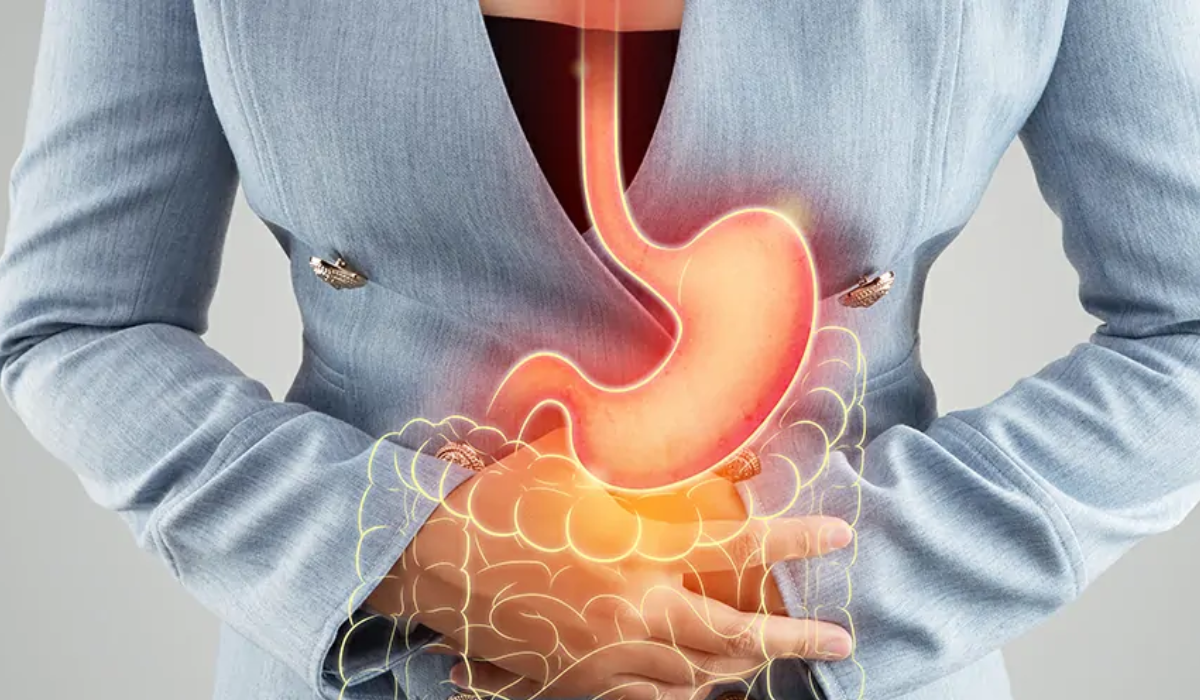
Acidity is the everyday term for what doctors call gastroesophageal reflux disease (GERD) – a condition where stomach acid flows back up into the food pipe (esophagus). When this happens occasionally after a heavy meal, it is just acidity. When it happens regularly – twice a week or more – it qualifies as GERD. Untreated chronic GERD damages the esophageal lining and, in some cases, progresses to Barrett’s esophagus or esophageal cancer.
Acidity and GERD Treatment Cost in Gaur City, Greater Noida by Severity
Quoting a single acidity treatment price is medically inaccurate – cost varies 200x or more from mild lifestyle-managed cases to surgical interventions. Here is the real 2026 breakdown:
| Severity / Treatment Type | Cost Range (₹) | Duration |
| Mild GERD (Lifestyle + OTC PPI) | 2,000 – 5,000 | 1-3 months |
| Moderate GERD (PPI + Monitoring) | 5,000 – 12,000 | 3-6 months |
| Erosive Esophagitis (PPI + Endoscopy) | 8,000 – 25,000 | Initial workup |
| Refractory GERD (Specialist Workup) | 20,000 – 50,000 | Diagnostic |
| H. pylori Triple Therapy | 1,500 – 4,000 | 14 days |
| Barrett’s Esophagus Surveillance | 40,000 – 1,50,000 | Annual + ablation |
| Fundoplication (Anti-reflux Surgery) | 1,50,000 – 3,50,000 | Surgical |
| LINX Magnetic Sphincter Device | 2,50,000 – 5,00,000 | Surgical |
The single biggest cost driver is whether your acidity has progressed to erosive esophagitis or Barrett’s esophagus. These conditions require endoscopic surveillance every 1-3 years for life, which compounds over decades. Catching GERD early and managing it with lifestyle plus targeted medication keeps lifetime costs under ₹50,000; letting it progress unchecked routinely crosses ₹3-5 lakh in cumulative cost.
Diagnostic Tests for Acidity and GERD
Mild GERD often needs no testing – lifestyle and a short PPI course suffice. But once symptoms persist or alarm features develop, accurate diagnosis becomes essential. Standard workup:
| Diagnostic Test | Cost (₹) |
| Upper GI Endoscopy | 2,000 – 9,000 |
| H. pylori Test (UBT / Stool Antigen) | 1,000 – 3,000 |
| 24-Hour pH Monitoring | 6,000 – 15,000 |
| Esophageal Manometry | 5,000 – 12,000 |
| Wireless pH Capsule (Bravo) | 15,000 – 25,000 |
Upper GI endoscopy is the gold-standard test – it directly visualises the esophageal lining and detects erosions, ulcers, hiatus hernia, or Barrett’s changes. H. pylori testing is essential before long-term PPI therapy is started, since this bacterial infection causes overlapping symptoms and has its own specific treatment protocol.
One clinical trap worth flagging: severe acidity-like pain that does not respond to antacids may not be acidity at all. The pancreatitis treatment cost in greater noida guide covers a condition that is routinely misdiagnosed as acidity or gas in its early stages. Pancreatitis presents with upper abdominal pain – often radiating to the back – that worsens after fatty meals and does not respond to standard acidity medications. Patients who self-medicate for weeks before specialist evaluation often end up with severe pancreatitis and lakhs in admission costs. If your acidity is unusual, severe, or non-responsive, ruling out pancreatitis is mandatory.
Common Triggers of Acidity and GERD
Understanding what drives your acidity is the first step toward cost-effective treatment. The major triggers in the Indian context:
• Obesity and central adiposity – Strongest modifiable risk factor. Even modest weight loss (5-7%) significantly reduces symptoms.
• Spicy, oily, or processed food – High-fat meals delay gastric emptying and worsen reflux.
• Late-night eating – Eating within 2-3 hours of bedtime is one of the strongest GERD triggers.
• Caffeine and carbonated drinks – Tea, coffee, and sodas relax the lower esophageal sphincter.
• Tobacco and alcohol – Both weaken the anti-reflux barrier and worsen symptoms.
• Stress and irregular meal timing – Cortisol elevation and erratic eating patterns disturb gastric motility.
Long-Term Complications of Untreated GERD
Chronic untreated acid reflux is not a benign condition. Over years, it can lead to:
• Erosive esophagitis – ulceration of the esophageal lining
• Esophageal strictures – narrowing of the food pipe causing swallowing difficulty
• Barrett’s esophagus – precancerous lining change requiring surveillance
• Esophageal adenocarcinoma – rare but serious long-term complication
• Chronic cough, asthma exacerbation, dental erosion, and laryngitis
Obesity is the strongest modifiable risk factor for both GERD and non-alcoholic fatty liver disease (NAFLD) – and the two conditions frequently coexist in the same patient. The fibroscan test price noida guide covers full pricing for liver assessment. Patients with chronic GERD plus central obesity should consider FibroScan-based liver screening, since they routinely have undiagnosed fatty liver too. Managing both conditions together through weight loss and metabolic optimisation costs less than treating each in isolation, and addresses the shared root cause rather than just suppressing symptoms with lifelong medications.
Medical vs Surgical Management
| Medical Management Pros | Surgical Management Pros |
| • First-line treatment for over 90% of GERD patients • PPIs are well-tolerated and rapidly effective • Cost starts under ₹5,000 for typical cases • No procedure risk or recovery time • Easily adjusted based on symptom severity | • Permanent solution – no lifelong PPI dependence • Best for refractory cases that fail medical therapy • Effective for large hiatus hernias and Barrett’s • LINX procedure reversible if needed • Single intervention vs decades of medication |
Why Specialist Evaluation Matters
Most acidity patients in Gaur City have never been formally evaluated. They have been on PPIs prescribed by general physicians or, worse, self-prescribed for years – without endoscopy, without H. pylori testing, without understanding what is actually happening in their food pipe. This is a problem because long-term PPI use masks symptoms but does not prevent progression of erosive damage or Barrett’s changes. Annual or biennial specialist review is what catches complications early, before they require expensive surgical interventions or surveillance protocols.
Finding the right Gastroenterologist in gaur city is straightforward but worth doing carefully. The criteria are simple: DM Gastroenterology qualification, in-house endoscopy capability (so you do not need a separate referral), and willingness to spend time understanding your lifestyle triggers rather than just writing a PPI prescription. A specialist who treats your acidity as a symptom requiring root-cause investigation will save you more in lifetime medication and complication costs than they ever charge in consultation fees.
Future of GERD Treatment
Endoscopic anti-reflux procedures – TIF (transoral incisionless fundoplication) and Stretta – are emerging as less invasive alternatives to surgery. LINX magnetic sphincter augmentation is gaining acceptance for moderate GERD. Newer PPI formulations and potassium-competitive acid blockers (P-CABs) like vonoprazan offer faster, longer-lasting acid control. Expect treatment options to broaden and per-episode costs to drop modestly as competition grows.
Conclusion
Acidity and GERD treatment cost in Gaur City varies dramatically based on severity – from ₹2,000 for a mild lifestyle-managed case to ₹5 lakh for surgical anti-reflux procedures. The single most important financial decision is not chasing the cheapest PPI prescription – it is getting accurate severity assessment early so you treat the actual condition you have rather than masking symptoms for years.
Acidity Severity Self-Check: When OTC Stops Being Enough
Most acidity patients self-medicate with OTC antacids for 3-5 years before seeing a specialist. By the time they do, mild GERD has often progressed to erosive esophagitis – or worse. Use this 3-tier severity check to decide if you need a specialist:
→ Tier 1 (Lifestyle fix): Symptoms 1-2 times per week, only after triggers. Diet and weight changes usually resolve it.
→ Tier 2 (Book consultation): Symptoms 3+ times per week, needing OTC antacids daily for 4+ weeks. Specialist evaluation recommended.
→ Tier 3 (Specialist now): Symptoms despite PPI for 4+ weeks, swallowing difficulty, unexplained weight loss, blood in stool or vomit, chest pain. Endoscopy is non-negotiable.
Dr. Sushrut Singh evaluates acidity and GERD at his Gaur City clinic and Fortis Hospital, with on-site endoscopy capability, so the full workup happens in a single visit.
Call or WhatsApp to book your acidity severity assessment.
Frequently Asked Questions (FAQs)
Q. Is acidity or GERD treatment covered by health insurance?
A. OPD-based GERD management (consultations, medications) is usually not covered unless your policy has an OPD rider. Diagnostic procedures like endoscopy are covered with pre-authorisation, and anti-reflux surgery is fully covered under most policies.
Q. How long should I take a PPI for acidity?
A. Short-term courses (4-8 weeks) are appropriate for most mild to moderate cases. Long-term PPI use beyond 6 months should always be under specialist supervision, with periodic endoscopy and consideration of H. pylori testing, since long-term PPI use carries its own risks, including B12 deficiency and bone density changes.
Q. Can severe acidity lead to cancer?
A. Chronic untreated GERD can lead to Barrett’s esophagus – a precancerous change in the esophageal lining – which is a known risk factor for esophageal adenocarcinoma. The risk is small in absolute terms but real, which is why ongoing acidity beyond 5-10 years warrants endoscopic surveillance regardless of how well-controlled symptoms feel on medication.