
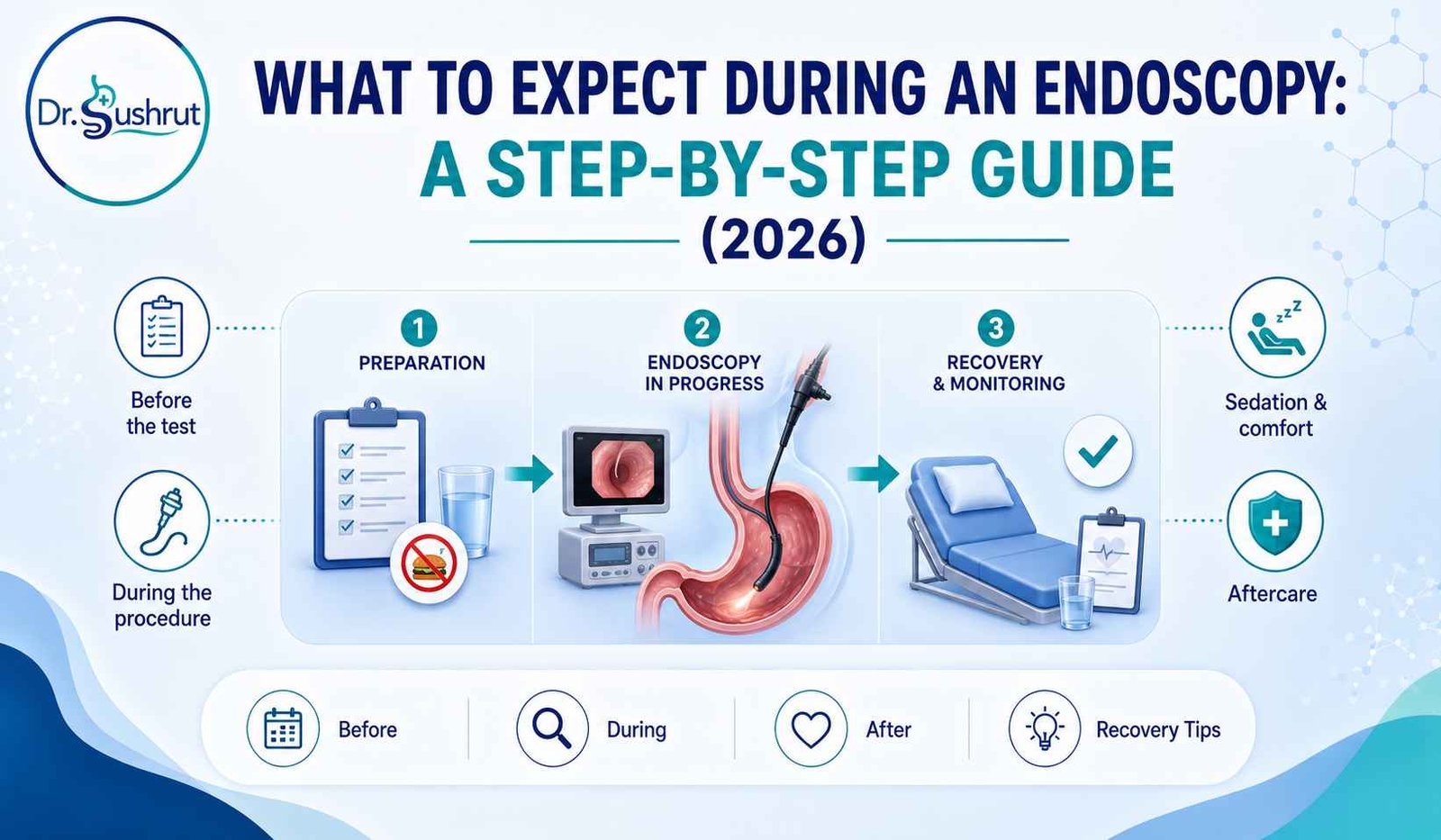
Most first-time endoscopy patients spend more time worrying about what will happen than they need to. The procedure itself is highly standardised across accredited hospitals in India, and the day-of experience follows a predictable rhythm from check-in to discharge. According to data published on PMC NCBI, upper GI endoscopy remains the definitive diagnostic and therapeutic tool for a wide range of gastrointestinal conditions, and knowing what actually happens on the day helps patients make more rational decisions about the procedure and cooperate better with the clinical team.
This guide walks you through the complete endoscopy journey, hour by hour – from the phone call that books the procedure to the discharge conversation. Nothing is exaggerated for reassurance; nothing is glossed over. The reader who finishes this guide will know exactly what to expect at each step, what is normal, and when something is a genuine concern that needs a follow-up call.
Key Takeaways
- Endoscopy preparation is straightforward – a 6-8 hour fast and stopping specific medications as advised by your specialist.
- The procedure itself takes 15-30 minutes; the total time in hospital is 3-4 hours including check-in, sedation setup, and recovery.
- Most patients sleep through the entire procedure under conscious sedation and remember nothing of it.
- Post-procedure recovery is same-day for over 95% of diagnostic cases; normal activities can resume the next morning.
- Warning signs that need a follow-up call include severe abdominal pain, black stools, fever, or persistent vomiting.
Understanding the Procedure at a Glance
Upper GI endoscopy uses a thin flexible tube with a camera and light at its tip, passed through the mouth into the esophagus, stomach, and the first part of the small intestine (duodenum). The specialist watches the internal lining in real time on a high-definition screen and can take biopsy samples, remove small polyps, or treat bleeding lesions in the same session. The procedure is performed under conscious sedation given through an IV line – the patient sleeps through the process and typically has no memory of it afterward. The scope has no cutting instruments; it is a viewing and sampling tool that works by direct visualisation rather than incision.
Before Your Endoscopy: What Happens in the Days Beforehand
Once the procedure is scheduled, you will typically receive instructions from the clinic covering four preparation points:
- Fasting – No food for 6-8 hours before the scheduled procedure time. Clear fluids like water may be allowed up to 2 hours before, depending on your specialist’s instructions.
- Medication adjustments – Blood thinners (aspirin, clopidogrel, warfarin) may need to be stopped or adjusted several days in advance. Diabetes medications may need dose changes on the morning of the procedure. Regular medications for blood pressure or heart conditions are usually continued with a small sip of water.
- Escort arrangement – You must arrange for someone to accompany you home after the procedure. Sedation makes it unsafe to drive, ride a two-wheeler, or take public transport alone.
- Documentation – Carry recent blood reports (if requested), your ID proof, and any insurance pre-authorisation paperwork.
Below is the full timeline of what happens from arrival to discharge on the day of the procedure:
| Time Point | What Happens |
|---|---|
| Arrival – 2 hours before | Check-in, paperwork, insurance verification |
| Arrival – 1 hour before | Change into hospital gown, brief nursing assessment |
| Arrival – 30 minutes before | Meet the anaesthetist, IV line inserted, pre-procedure medications given |
| Procedure – 0 to 30 minutes | Sedation given, procedure performed, biopsies taken if needed |
| Recovery – 30 minutes | Wake up in recovery bay, monitored for stable vitals |
| Recovery – 60-90 minutes | Sedation clears, light snack offered, first walk assisted |
| Discharge – 2-3 hours after | Specialist discussion, discharge summary, prescription |
Reading this timeline in advance removes most of the day-of confusion. The other thing that helps is choosing the right specialist and centre for the procedure. Consulting the Best Gastroenterologist in Greater Noida before booking gives you a chance to ask specific questions about the sedation protocol, the equipment used, the expected duration, and the discharge criteria – all before you have paid any deposit. A specialist who welcomes these questions and answers them plainly is signalling how the actual procedure day will go; a specialist who deflects them is signalling something else entirely.
The Day of Your Endoscopy: Hour by Hour
Arrival and check-in (2 hours before procedure). You arrive at the hospital, complete the paperwork, and change into a hospital gown. The nursing team takes vitals and confirms the fasting status. Any last-minute questions get raised now.
Anaesthesia consultation (1 hour before). The anaesthetist meets you, reviews your medical history, checks your airway, and explains the sedation approach. An IV line goes into a vein in your hand or forearm. This IV is what will deliver the sedation, but you are still fully awake and comfortable at this point.
Into the procedure room (procedure time). You are wheeled into the endoscopy suite and positioned on your left side. A mouthguard is placed between your teeth to protect them and the scope. The anaesthetist injects the sedative through your IV. Within a minute, you are asleep. The specialist then performs the endoscopy, examining the esophagus, stomach, and duodenum in turn. Biopsies or interventions happen during this time if needed.
To understand exactly which conditions endoscopy diagnoses and how the procedure is set up at Dr. Sushrut’s clinics specifically, the dedicated Endoscopy in Greater Noida page walks through the equipment, the safety measures, the range of conditions the procedure is used for, and the specialist protocols followed. Reading it alongside this walkthrough helps you match the general procedure description to what actually happens at the centre where you will be treated – which is more reassuring than any generic guide can be.
After the Procedure: What Normal Recovery Looks Like
You wake up in the recovery bay 20-30 minutes after the procedure ends, initially groggy but rapidly clearing. Nursing staff monitor your vitals for another 30-60 minutes. Most patients feel completely alert within 90 minutes of the procedure ending.
- Throat sensation: Mild irritation or scratchiness is normal for a few hours. Warm liquids often help.
- Bloating: A gentle bloating from air introduced during the procedure is common and settles within a few hours as gas passes.
- Drowsiness: The residual sedative effect wears off within 4-6 hours; you should not drive or make important decisions during this window.
- Diet: A light meal is usually allowed 2-3 hours after the procedure. Normal diet resumes by evening.
- Activity: Sedentary activity (desk work, watching TV, light walking) is fine the same day. Strenuous exercise, driving, and demanding work should wait 24 hours.
For patients who then want to know the practical cost side of what they have just experienced, the detailed Endoscopy Cost in Greater Noida guide breaks down what a diagnostic endoscopy typically costs, what add-ons like biopsy or polyp removal cost separately, and what your health insurance is likely to cover under day-care benefits. Reviewing this after the procedure helps you understand your discharge bill and any insurance claim filing you need to do.
Warning Signs After Endoscopy: When to Call Back
Complications from diagnostic endoscopy are rare, but knowing what to watch for gives you and your family peace of mind. Contact your specialist urgently if you experience any of the following in the 24-48 hours after the procedure:
- Severe or worsening abdominal or chest pain, especially if new
- Vomiting blood, or vomit that looks like coffee grounds
- Black tarry stools that were not present before the procedure
- Fever above 100.4°F (38°C)
- Persistent difficulty swallowing or breathing
- Chest tightness or shortness of breath
These are uncommon but treatable when caught early. Do not wait for the next scheduled follow-up if any of these appear – the earlier a complication is addressed, the smaller the intervention needed.
Anxious About Your Upcoming Endoscopy? Talk Before the Day
If this is your first endoscopy, the biggest source of anxiety is usually the unknown. A short pre-procedure conversation with the specialist who will do the scope answers most of these questions and turns the day from an ordeal into a routine event. Do not walk into the hospital with unanswered questions.
Call Dr. Sushrut: +91 93153 54431
WhatsApp Your Questions Before the Procedure
Future Trends: What’s Changing in 2026
Sedation protocols are shifting toward shorter-acting agents that cut recovery time from 90 minutes to under 45 in many centres. Ultra-thin transnasal endoscopes are available for selected diagnostic cases, offering an alternative for patients who prefer to avoid sedation entirely. AI-assisted image analysis during the procedure is improving the detection of small early lesions, particularly in surveillance cases. Same-day discharge with home monitoring apps is being trialled at some larger hospitals, further reducing the time patients spend in the facility.
Conclusion
The endoscopy experience is far more predictable and far less demanding than most first-time patients expect. Preparation is straightforward, the procedure itself is comfortable under sedation, and recovery is same-day in over 95% of diagnostic cases. Knowing the timeline in advance removes most of the anticipatory anxiety and lets you focus on the actual medical question the procedure is meant to answer. Your job is to arrive prepared and to follow up promptly if anything unusual happens afterward – the rest is routine clinical work handled by the team.
Your Endoscopy Day: Hour-by-Hour Snapshot
Print this or save it to your phone. This is what an average endoscopy day looks like from arrival to going home:
| Time | Where You Are | What Is Happening |
|---|---|---|
| 7:00 AM | Home | Wake up, no food or drinks |
| 8:00 AM | Home | Escort arrives; leave for hospital |
| 9:00 AM | Hospital reception | Check-in, paperwork, insurance verification |
| 9:30 AM | Pre-procedure room | Change gown, vitals check, IV line inserted |
| 10:00 AM | Endoscopy suite | Sedation given, procedure begins |
| 10:25 AM | Endoscopy suite | Procedure completed |
| 10:30 AM | Recovery bay | Waking up, monitored |
| 11:30 AM | Recovery bay | Fully alert, first light snack |
| 12:30 PM | Discharge lounge | Specialist discussion, discharge summary |
| 1:00 PM | Home | Rest for the afternoon |
| Next morning | Home | Back to normal routine |
By this time tomorrow, most of you will be back at work with the procedure firmly behind you.
Frequently Asked Questions (FAQs)
Can I eat or drink anything before the procedure?
No, not in the 6-8 hours immediately before. Your specialist may allow small sips of clear water up to 2 hours before the scheduled time, but everything else is off-limits. Fasting is essential for two reasons: an empty stomach allows the specialist to see the lining clearly, and it prevents the risk of stomach contents entering the airway during sedation. If you accidentally eat or drink something, tell the clinic before you arrive – the procedure may need rescheduling.
Will I remember anything from the procedure?
Almost certainly not. Standard conscious sedation causes both sleep and short-term memory loss for the duration of the procedure. Most patients recall being wheeled into the room and then waking up in recovery, with no memory of anything in between. A very small number of patients do remember fragments, but this does not mean the procedure was painful – only that the sedation effect on memory was slightly less than usual. The procedure itself is painless in either case.
Do I need someone to accompany me?
Yes, mandatory. Sedation impairs judgement, coordination, and reflexes for several hours after the procedure, even if you feel fully alert. Hospitals will not discharge you unless a responsible adult is available to take you home. Do not attempt to drive, ride a two-wheeler, or take public transport alone. The escort does not need to stay through the procedure – they can arrive at the discharge lounge two to three hours after the procedure begins.
When can I return to work after endoscopy?
Most patients return to work the next day. Same-day sedentary work like reading email is usually fine if you feel up to it, but no important decisions, no signing contracts, and no operating machinery on the day of the procedure. If your job involves physical labour, driving, or safety-critical decisions, take the full day off and return the following morning. Biopsy results, if any were taken, typically come back within 5-7 days.
Book Your Consultation at Either Location
Both clinics offer the same specialist evaluation and procedural expertise. Choose the location most convenient for you:
Gaur City Clinic – Greater Noida West
Fortis Hospital – Sector 62
Same specialist. Same standards. Your choice of location.