
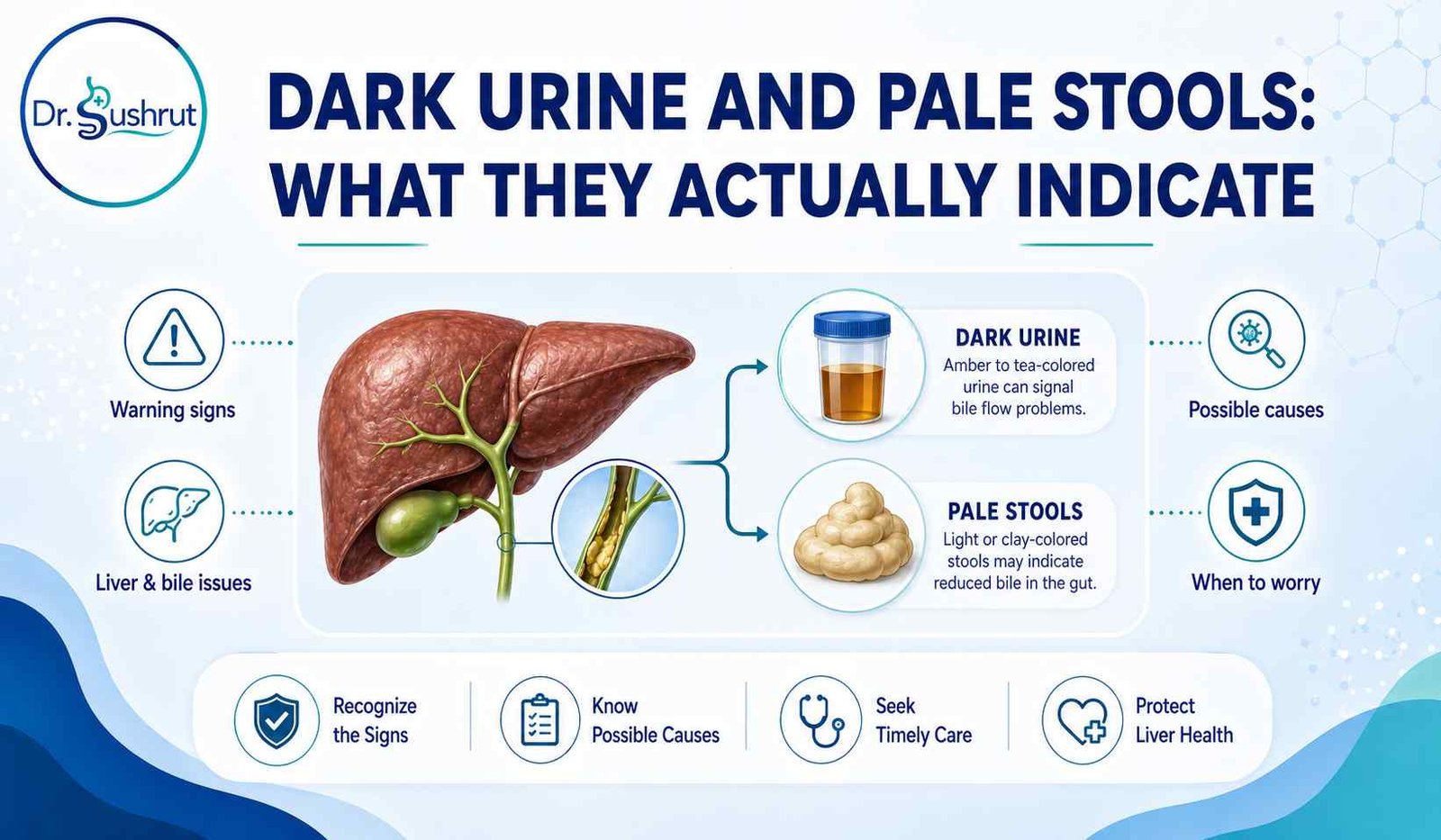
Most patients notice dark urine or pale stools individually and think little of it – dehydration for one, dietary variation for the other. What they should notice is when both appear together in the same week. That specific combination is not random; it is a specific signal that bile is not flowing normally from the liver into the intestine, and it deserves a medical opinion within days, not weeks. According to data published on PMC NCBI, gastrointestinal and liver disease carries one of the highest burdens in Indian outpatient care, and the dark-urine-plus-pale-stool pattern is one of the most reliable early clues that something is disrupting the liver-bile duct axis.
This guide explains what the combination actually means, which conditions cause it, when it is urgent versus when it needs a scheduled review, and how a specialist works out the exact cause. The pattern is easy to miss until you know what to look for, and it is easy to dismiss until you understand what is behind it. Here is what the evidence and clinical experience actually say.
Key Takeaways
- Dark urine + pale stools together indicate a bile flow problem, not a diet issue.
- The combination usually appears before yellow eyes or full jaundice becomes obvious.
- Common causes include gallstones blocking the bile duct, hepatitis, and pancreatic conditions.
- This is a same-week medical evaluation issue, not a wait-and-see one.
- Blood tests plus an ultrasound identify the cause in over 90% of cases.
Understanding What the Colours Actually Mean
Urine gets its normal yellow colour from a compound called urobilin, which is a breakdown product of bilirubin. Stool gets its normal brown colour from a related compound called stercobilin, also from bilirubin. Bilirubin itself is produced when old red blood cells are broken down; it travels to the liver, gets processed into bile, and is released into the intestine, where it eventually ends up giving stool its colour and helping digest fats. When something blocks or slows bile flow, bilirubin cannot reach the intestine properly. It builds up in the blood, spills into urine (making it dark), and never reaches the stool (making it pale). This is why the two symptoms appear together – they are two sides of the same underlying problem.
Common Causes of Dark Urine and Pale Stools
Below is a summary of the main conditions that produce this combination. The list is not exhaustive but covers over 85% of cases seen in gastroenterology practice:
| Cause | How It Blocks Bile Flow | Typical Urgency |
|---|---|---|
| Gallstone blocking the common bile duct | Physical obstruction preventing bile drainage | Urgent – within 24-72 hours |
| Acute viral hepatitis (A, B, C, E) | Liver inflammation impairs bile processing | Urgent – same-week evaluation |
| Alcoholic hepatitis | Alcohol-induced liver inflammation | Urgent – same-week evaluation |
| Drug-induced liver injury | Medication toxicity impairs bile flow | Urgent – identify and stop the drug |
| Pancreatic head mass | Tumour compressing the bile duct externally | Urgent – specialist evaluation immediately |
| Bile duct stricture | Narrowing from surgery, inflammation, or malignancy | Same-week evaluation |
| Advanced cirrhosis or liver failure | Structural damage impairing bile handling | Ongoing specialist management |
The first thing to do when the dark-urine + pale-stool pattern appears together is to stop guessing at the cause. Talking to a Best Gastroenterologist in Greater Noida who can order the right blood tests and imaging in the correct sequence will identify the cause in almost all cases within 48-72 hours. A DM Gastroenterology specialist knows which panel of tests distinguishes viral hepatitis from a gallstone from a pancreatic mass, and orders them in an order that gets you to the answer quickly. Waiting to see if the colours “go back to normal on their own” is exactly the mistake that turns a treatable stone into a surgical emergency and delays hepatitis treatment past the ideal window.
Which Cause Is Which? Distinguishing Features
Different causes of dark urine + pale stools tend to come with different accompanying symptoms. Understanding the pattern helps you communicate more clearly with your specialist, though it does not replace the diagnostic workup:
Gallstone obstruction: Usually sudden onset, often with severe right upper abdominal pain that may radiate to the back or right shoulder. Nausea, vomiting, and fever may accompany the pain. Pain typically comes in waves rather than being constant.
Viral hepatitis: Gradual onset over 1-2 weeks. Preceded or accompanied by fatigue, loss of appetite, low-grade fever, mild body aches, and nausea. The abdominal discomfort is dull rather than sharp. Often follows a period of eating outside food or contact with a confirmed hepatitis case.
Drug-induced hepatitis: Symptoms appear days to weeks after starting a new medication. Common culprits include some antibiotics, anti-tuberculosis drugs, statins, and certain herbal or Ayurvedic preparations. The clue is the temporal link to the medication start.
Pancreatic mass: Usually painless or minimally painful in the early stages. Weight loss, poor appetite, and progressive rather than sudden onset of the colour changes. Requires urgent evaluation because the treatment window narrows quickly.
If the pattern started suddenly with pain, the direct financial reality of gallstone-related bile duct obstruction management is worth understanding. The Jaundice Treatment Cost in Greater Noida guide breaks down what different treatment pathways cost – from a simple ERCP to remove a bile duct stone, to surgical management of gallbladder disease, to hospitalisation for acute hepatitis, to comprehensive management of advanced liver disease. Costs vary significantly by cause and severity, and knowing the range upfront helps the family plan and reduces one source of stress at what is already an anxious time.
When to Seek Care and How Urgently
The pattern of dark urine + pale stools should always trigger medical evaluation – the question is only how urgently. Here is the practical framework:
Within 24 hours (emergency) – If accompanied by severe abdominal pain, high fever, vomiting that prevents fluids, confusion or altered mental status, or if the person has known liver disease.
Within 2-3 days (urgent) – If the colours have persisted for more than 48 hours, if there is progressive fatigue, poor appetite, or if any yellow tinge in the eyes appears.
Within 1 week (scheduled) – If the colours are mild, intermittent, appeared recently after a new medication, and there are no other symptoms.
The framework matters because gallstone obstruction that is 48 hours old is a different clinical situation from gallstone obstruction that is 5 days old – the risk of cholangitis (bile duct infection) rises sharply with delay. Similarly, catching viral hepatitis early lets your specialist decide on antiviral treatment, supportive care, and monitoring intervals; catching it late means playing catch-up on damage that has already progressed.
This is the same clinical family as isolated yellow eyes, and the diagnostic and evaluation approach overlaps significantly. The Yellow Eyes – Causes and When to Worry guide walks through the same three-tier urgency framework specifically for scleral icterus. Reading both together gives you the complete symptom cluster picture: dark urine, pale stools, and yellow eyes are the classic triad of biliary obstruction or hepatocellular injury, and each one becomes more meaningful in the presence of the others.
Have You Noticed the Dark-Urine Pale-Stool Pattern for More Than 48 Hours?
This is a same-week evaluation issue, not a wait-and-see one. The tests to identify the cause are simple, quick, and available at any accredited centre. Do not let this pattern continue past a week without a specialist opinion – the treatable window for many causes is narrower than most patients realise.
Call Dr. Sushrut: +91 93153 54431
WhatsApp a Photo of Your Recent Reports
Future Trends: What’s Changing in 2026
Non-invasive imaging like MRCP (Magnetic Resonance Cholangiopancreatography) is becoming more widely available in Greater Noida, offering a detailed picture of the bile duct without needing ERCP for diagnosis alone. Point-of-care ultrasound in outpatient gastroenterology clinics is speeding up initial assessment. Newer blood-based tests for viral hepatitis panels return results within hours rather than days. For patients, the practical impact is a faster path from symptom recognition to identified cause to appropriate treatment – usually within a single week if the workup is initiated promptly.
Conclusion
Dark urine and pale stools appearing together are not a diet or dehydration issue – they are a specific signal of disrupted bile flow that should always trigger medical evaluation within the same week. Most causes are identifiable with a straightforward blood panel and ultrasound, and most are treatable when caught early. The most common mistake patients make is waiting to see if the colours normalise on their own; the second most common is treating each symptom separately rather than recognising the underlying pattern. Recognise the combination, note when it started, and get the workup done promptly.
Quick Home Assessment – What to Check Right Now
Before your specialist visit, take five minutes to answer these three questions carefully. Bring the answers to the consultation:
1. Urine Colour Check
- Normal pale yellow → Green
- Deep amber or tea-coloured → Amber
- Very dark brown or almost black → Red
2. Stool Colour Check
- Normal brown → Green
- Pale yellow or clay-coloured → Amber
- White or chalky → Red
3. Eye and Skin Check (in natural daylight, near a window)
- Whites of eyes clearly white → Green
- Very faint yellow tinge visible → Amber
- Clearly yellow whites or yellow skin → Red
Any single Red answer or any two Amber answers means: within 48 hours, seek specialist evaluation.
Take a photo of your recent urine and stool in good light before flushing. The specialist may ask, and photos are more informative than descriptions.
Frequently Asked Questions (FAQs)
Can dehydration alone cause dark urine and pale stools together?
Dehydration can cause darker urine, but it does not cause pale stools. If both are appearing together, dehydration is not the explanation. Rehydrating for 24 hours will clarify the urine question – if colour normalises with adequate water intake, dehydration was likely a factor. If it persists or if stools remain pale even with normal hydration, the combination requires specialist evaluation for a bile flow problem.
Can certain foods or medications make my urine dark and stools pale?
Some foods can temporarily darken urine (beetroot, dragonfruit, some artificial dyes) and some medications can affect stool colour (iron supplements make stool darker, some antacids make it lighter). However, food or medication effects usually affect only one of the two, not both. If both dark urine and pale stools appear together for more than 48 hours, food and medication are unlikely to be the sole explanation – clinical evaluation is warranted.
What tests will the specialist order to identify the cause?
Standard first-line workup includes liver function tests (bilirubin, ALT, AST, ALP, GGT), a full blood count, and an abdominal ultrasound. Depending on findings, viral hepatitis screening panels (Hepatitis A, B, C, E), MRCP or CT imaging for suspected obstruction, or additional specialist tests may follow. Most causes are identified within 48-72 hours of initiating the workup. Bring any recent medications, herbal supplements, or Ayurvedic preparations to the visit.
How long does treatment take for the different causes?
It varies significantly. A bile duct stone removed by ERCP often resolves symptoms within days. Viral hepatitis typically resolves over 4-8 weeks with supportive care, though some subtypes need antiviral treatment. Drug-induced hepatitis usually resolves within weeks of stopping the culprit medication. Pancreatic causes need more comprehensive multidisciplinary management. Your specialist will give a specific timeline once the cause is identified.
Book Your Consultation at Either Location
Both clinics offer the same specialist evaluation and diagnostic pathway. Choose the location most convenient for you:
Gaur City Clinic – Greater Noida West
Fortis Hospital – Sector 62
Same specialist. Same standards. Your choice of location.