
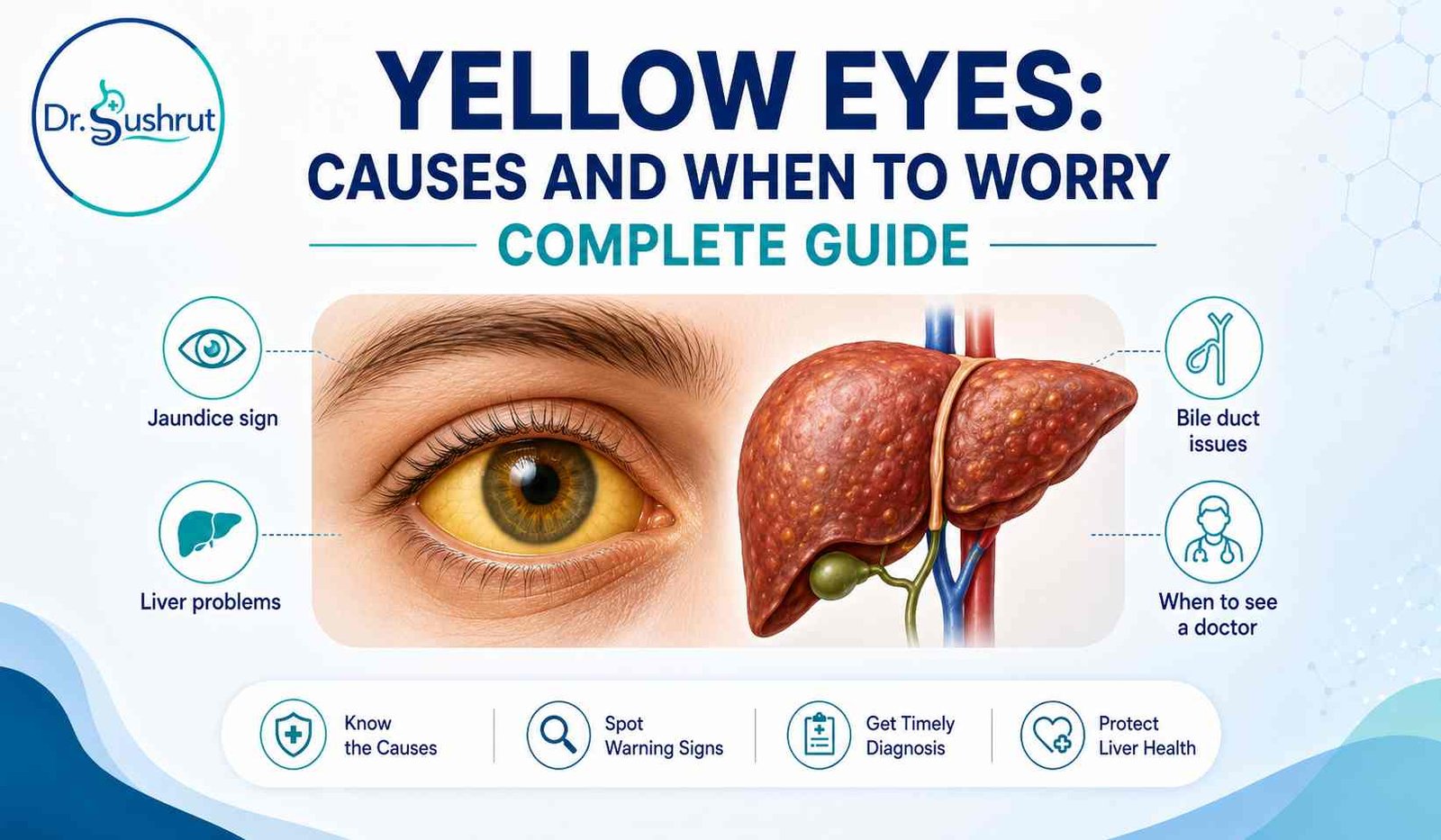
Catching a glimpse of yellow in the mirror is rarely a comfortable moment. Yellow eyes – medically called scleral icterus – mean bilirubin is building up in your tissues, but the cause behind that buildup can range from completely harmless to genuinely life-threatening. According to data published on PMC NCBI, India carries one of the highest burdens of chronic liver disease globally, and jaundice-related presentations form a significant portion of gastroenterology consultations every year. The right next step depends entirely on what is causing your specific case.
This guide walks you through the 7 most common causes of yellow eyes, the red-flag symptoms that change the urgency level, and exactly what diagnostic workup your specialist will run. Most importantly, it tells you when yellow eyes are a wait-and-see situation versus when they are a same-day emergency. Yellow eyes always deserve evaluation – but not every case is the disaster patients fear.
Key Takeaways
- Yellow eyes appear when blood bilirubin rises above approximately 3 mg/dL.
- The 7 main causes range from benign Gilbert syndrome to life-threatening bile duct obstruction.
- Red-flag symptoms (severe pain, fever, confusion, dark urine + pale stools) need emergency evaluation within hours.
- Painless jaundice can signal pancreatic or bile duct tumour – never dismiss it as harmless.
- A simple LFT blood test plus ultrasound identifies the cause in 80% of cases.
What Yellow Eyes Actually Mean
Scleral icterus – the medical term for yellow eyes – is a yellow discoloration of the sclera (the white part of the eye) caused by elevated bilirubin in body tissues. Bilirubin is a yellow pigment produced when red blood cells break down. Normally, the liver processes bilirubin and excretes it via bile into the intestine. When bilirubin production exceeds the liver’s processing capacity, or when bile flow is obstructed, bilirubin accumulates in tissues and yellow discoloration appears – first in the eyes, then in the skin, mucous membranes, and urine. The pattern of bilirubin elevation, combined with other lab and symptom findings, tells your specialist exactly where the problem lies.
7 Major Causes of Yellow Eyes
Yellow eyes are a symptom, not a disease – the underlying cause determines what happens next. The 7 main categories of causes and their accompanying symptoms are summarised below:
| Category | Specific Cause | Other Symptoms to Notice |
|---|---|---|
| Liver Inflammation | Viral hepatitis (A, B, C, E) | Fatigue, fever, nausea, dark urine |
| Chronic Liver Damage | Alcoholic or fatty liver cirrhosis | Abdominal swelling, weight loss, fatigue |
| Bile Duct Blockage | Bile duct stones, strictures | Severe RUQ pain, dark urine, pale stools |
| Pancreatic Disease | Tumour pressing on the bile duct | Painless jaundice, weight loss, itching |
| Blood Disorders | Hemolysis, malaria, sickle cell | Pallor, fatigue, dark urine, anaemia |
| Hereditary (Benign) | Gilbert syndrome | Mild yellow during stress or fasting, no other symptoms |
| Drug-Induced | Paracetamol overdose, anti-TB drugs | Recent medication exposure, nausea |
Identifying which of these 7 categories applies to your specific case is the work of a specialist evaluation. The Best Gastroenterologist in Greater Noida will combine your symptom pattern, drinking and medication history, physical examination findings, and a structured blood and imaging workup to pinpoint the cause. Each cause has its own treatment path – viral hepatitis needs antivirals and supportive care, bile duct stones need ERCP, hemolysis needs hematology workup, and Gilbert syndrome needs only reassurance. Getting the diagnosis wrong leads to wrong treatment and worsening outcomes. A single thorough evaluation at the right time saves weeks of fragmented testing across multiple physicians and prevents the dangerous middle ground where serious conditions are mistaken for benign ones.
Liver-Related Causes (Most Common)
In Indian adults, liver-related causes account for over half of all yellow-eye presentations. Common ones include:
- Viral hepatitis A and E – cause acute jaundice, usually after fecal-oral exposure
- Viral hepatitis B and C – cause chronic infection that may flare with jaundice
- Alcoholic hepatitis – acute, severe; can be life-threatening
- Decompensated cirrhosis – from any chronic liver disease cause
Bile Duct Obstruction Causes
When bile cannot drain from the liver to the intestine, bilirubin backs up into the bloodstream. Common obstruction causes:
- Bile duct stones – often migrating from the gallbladder
- Pancreatic tumour – classically causes painless progressive jaundice
- Cholangiocarcinoma – bile duct cancer
- Strictures from past inflammation or surgery
Blood Disorder (Hemolytic) Causes
When red blood cells are destroyed faster than the liver can process the released bilirubin, hemolytic jaundice develops. Common causes include malaria, sickle cell disease, thalassemia, G6PD deficiency, and autoimmune haemolytic anaemia. These conditions usually produce additional clues like pallor, fatigue, and a positive family history.
Whatever the suspected cause, the first step is a blood and imaging investigation. The complete jaundice test in gaur city guide covers every test you may need – liver function panel, viral hepatitis screen, ultrasound, and MRCP – along with realistic pricing for each. Most diagnostic workups for yellow eyes fall under Rs 5,000 – Rs 8,000 unless advanced imaging like MRCP or ERCP is needed. Costs scale with how invasive and advanced the testing becomes, but the early-stage blood and ultrasound workup is affordable enough that no patient should delay evaluation purely for cost reasons. Faster diagnosis directly translates to faster recovery in conditions like hepatitis A or bile duct stones, where intervention timing matters.
Red Flags – When Yellow Eyes Are an Emergency
Yellow eyes plus any of the symptoms below need same-day evaluation:
| Symptom Combined With Yellow Eyes | What It May Indicate |
|---|---|
| Severe upper right abdominal pain | Bile duct stone with cholangitis |
| High fever with chills | Acute cholangitis – emergency |
| Confusion or disorientation | Hepatic encephalopathy – emergency |
| Severe abdominal swelling (ascites) | Decompensated liver disease |
| Vomiting blood or black stools | Variceal bleeding – emergency |
| Dark urine and pale stools together | Complete bile duct obstruction |
| Onset after starting a new medication | Drug-induced liver injury |
How Yellow Eyes Are Investigated
- Liver function tests (LFT) – measures bilirubin, SGOT, SGPT, ALP, GGT
- Complete blood count with peripheral smear – rules out hemolysis
- Viral hepatitis panel – HBsAg, anti-HCV, anti-HAV IgM, anti-HEV IgM
- Ultrasound abdomen – first-line imaging for liver, gallbladder, and bile ducts
- MRCP or EUS – if bile duct obstruction is suspected on ultrasound
- FibroScan – if chronic liver disease is suspected, to stage fibrosis
Workup costs are usually reasonable. The complete gastroenterology consultation cost in noida guide breaks down typical specialist visit, blood panel, and imaging combination costs. For yellow eyes, the standard first-visit workup usually falls under Rs 2,500 with results in 24-48 hours. Many patients delay consultation, worrying about cost – but an affordable upfront evaluation prevents the much more expensive hospitalisation that comes from late-stage diagnosis.
What’s Changing in Jaundice Care
Point-of-care bilirubin testing is becoming widely available in clinics, allowing diagnosis confirmation during the first visit itself. Non-invasive imaging like MRCP has largely replaced diagnostic ERCP, which is now reserved for cases needing therapeutic intervention. New direct-acting antivirals make Hepatitis C jaundice fully curable in 12 weeks, transforming what was once a long-term concern. Improved hepatobiliary cancer screening means earlier detection of pancreatic and bile duct tumours, where outcomes have historically been poor.
Conclusion
Yellow eyes are a symptom that always deserves evaluation but rarely needs panic. The 7 underlying causes range from benign Gilbert syndrome to life-threatening emergencies, and the difference matters because the treatment path is entirely different. Recognising red-flag symptoms tells you whether you need the ER tonight or a specialist visit next week. Either way, a simple LFT and abdominal ultrasound usually identify the cause within days – giving you a clear answer instead of weeks of worry.
Yellow Eyes Triage: When to Act and How Fast
TIER 1 – EMERGENCY (Go to ER NOW): Yellow eyes WITH any of: severe abdominal pain, high fever and chills, confusion or drowsiness, vomiting blood, or severe abdominal swelling. These combinations may indicate cholangitis, hepatic failure, or variceal bleeding – all life-threatening.
TIER 2 – URGENT (Specialist within 48 hours): Yellow eyes WITH dark urine, pale stools, persistent fatigue, mild abdominal discomfort, or recent medication exposure. These may signal active hepatitis or partial bile duct obstruction needing prompt evaluation.
TIER 3 – ROUTINE (Specialist within 1-2 weeks): Mild yellow tint with no other symptoms, especially if it appears with stress, fasting, or fatigue, and resolves. May be Gilbert syndrome (benign) – but still warrants confirmation by LFT to rule out other causes.
When in doubt, get tested. Dr. Sushrut Singh tells you exactly which tier you fall into. Call or WhatsApp to book a jaundice evaluation.
Frequently Asked Questions (FAQs)
Can yellow eyes go away on their own?
Yellow eyes can resolve on their own if the cause is mild and self-limiting – for example, hepatitis A typically resolves over 2-6 weeks, and Gilbert syndrome flares fade with rest. But yellow eyes from bile duct obstruction, alcoholic hepatitis, or chronic liver disease will not resolve without treatment. Until the cause is identified, never assume it will resolve – get the LFT done first.
Can stress or fatigue alone cause yellow eyes?
Stress and fasting can trigger mild yellow discoloration in people with Gilbert syndrome, a harmless genetic condition affecting about 5-10% of the population. The yellow tint is mild, comes and goes, and is not accompanied by other symptoms. Stress in someone without Gilbert syndrome does not directly cause jaundice – any persistent yellow tint needs proper evaluation.
How quickly should I see a doctor for yellow eyes?
Same-day evaluation if any red-flag symptom is present – severe pain, fever, confusion, dark urine with pale stools, or vomiting blood. Within 48 hours if yellow eyes appear with fatigue, mild discomfort, or recent medication use. Within 1-2 weeks for an isolated mild yellow tint with no other symptoms. The general principle: any new yellow discoloration of the eyes is worth a specialist visit.