
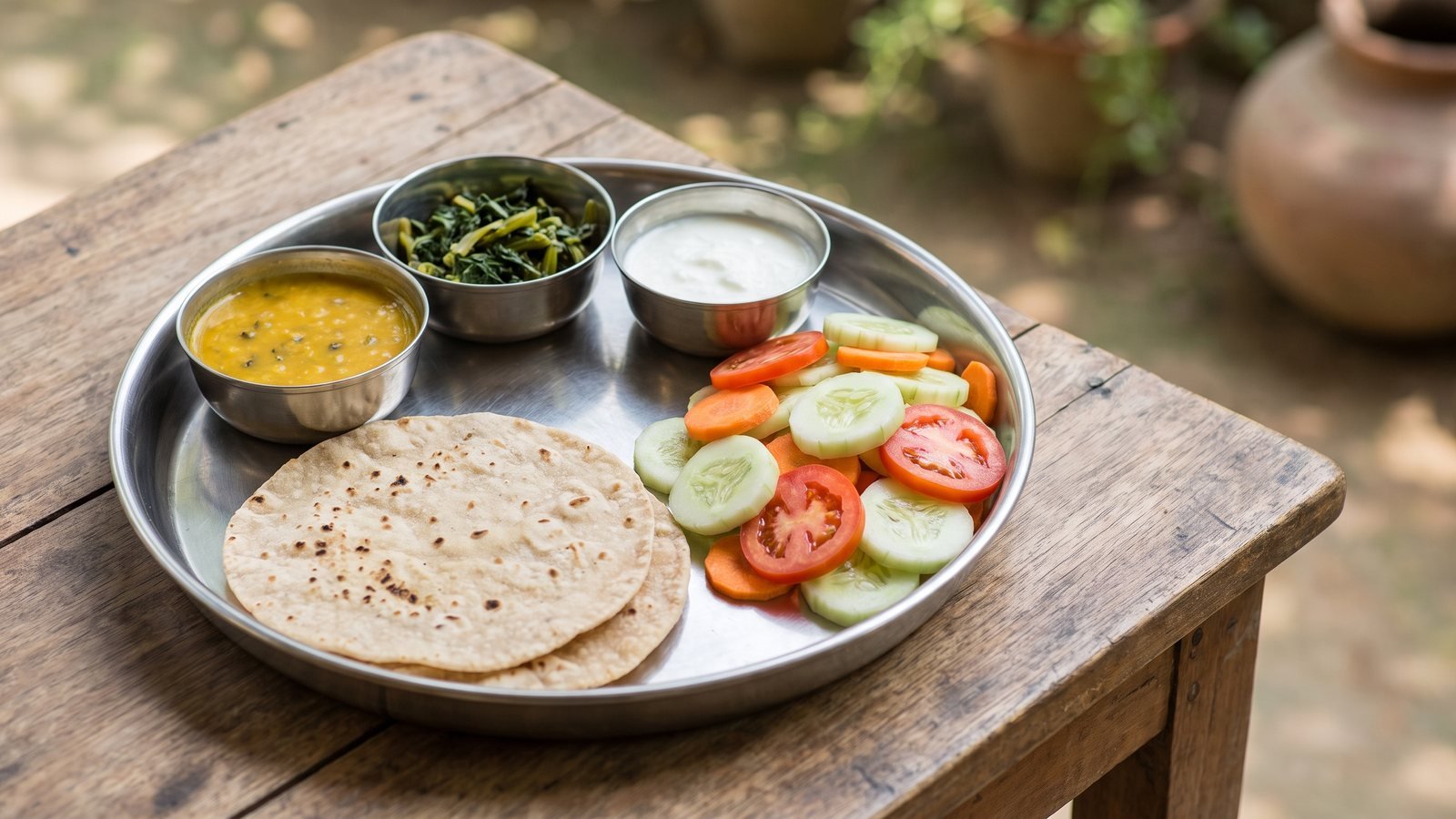
The ultrasound report says “grade 1 fatty liver”, the doctor says “control your diet”, and the family WhatsApp group forwards a list of forty banned foods. What actually moves liver fat is steady weight loss. In a 52-week study of 293 people with biopsy-proven fatty liver inflammation, losing 7 to 10% of body weight lowered disease activity in those with few other risk factors; among those who lost 10% or more, 90% saw the inflammation clear and 45% had less scarring.
This page is the eating plan, not another ban list (the foods to avoid with fatty liver are covered separately): a 7-day Indian chart with vegetarian and non-vegetarian options, katori and roti portions, swaps, oil and sugar limits, and festival advice.
Key Takeaways
- Slow, steady weight loss through food and activity is what helps fatty liver. It can improve or reverse in many people, but no diet can promise it.
- Plate method: half vegetables and salad, a quarter roti or rice, a quarter dal, paneer, egg, fish or chicken.
- Oil and ghee together: about 4 teaspoons a day for a sedentary woman, 6 for a sedentary man.
- Added sugar within 25 to 30 grams a day, tea included; whole fruit rather than juice; no alcohol.
- Liver tonics, karela juice and skipped meals do not replace any of this.
- Track progress through weight, waist, liver blood tests and a repeat FibroScan, at an interval your doctor sets.
What a Fatty Liver Diet Chart Is Meant to Do
Definition: Fatty liver disease (also called NAFLD, now renamed MASLD) means fat has built up inside liver cells, usually alongside excess weight, diabetes, high blood pressure or high triglycerides. An ultrasound “grade 1, 2 or 3” describes how much fat the liver appears to hold. It does not show fibrosis, the scarring that decides how serious the condition is.
A pooled analysis of 50 Indian studies estimated fatty liver in 38.6% of Indian adults. Most feel nothing and learn of it from a routine health check-up scan; the early signs worth knowing are explained separately.
A diet chart has three jobs: bring weight down slowly, cut the sugar and oil that feed liver fat, and keep enough protein to lose fat rather than muscle. The ICMR-National Institute of Nutrition (ICMR-NIN) advises slow, steady weight reduction and warns that extreme approaches can harm. This chart is for fatty liver without cirrhosis; with cirrhosis, kidney disease or uncontrolled diabetes, set the plan with your doctor.
The Plate Method and Portions
The ICMR-NIN Dietary Guidelines for Indians build the day so that vegetables, fruits and greens make up about half the plate. Fill half with sabzi and salad, a quarter with roti or rice, and a quarter with dal, chana, paneer, egg, fish or chicken, plus a katori of dahi. Portions below use the ICMR-NIN 200 ml katori and suit a sedentary adult aiming to lose weight.
| Food | Portion per meal |
|---|---|
| Phulka | 2 medium, no ghee on top, or 1 phulka plus half katori rice |
| Cooked rice | 1 katori |
| Dal, rajma or chana | 1 katori |
| Sabzi and salad | 2 katori or more |
| Dahi or chaas | 1 katori or 1 glass |
| Paneer | 4 to 5 small cubes |
| Egg, fish or chicken | 1 to 2 eggs, or a palm-sized piece |
| Fruit and nuts | 1 medium fruit; a small handful of unsalted nuts |
How strict to be depends on scarring, which an ultrasound grade cannot show. A FibroScan, a non-invasive test of liver fat and stiffness, gives both numbers and a baseline for later.
Cooking oil. ICMR-NIN limits visible fat (oil, ghee and butter together) to 20 grams a day for sedentary women and 30 grams for sedentary men, roughly 4 and 6 teaspoons, with ghee or butter at most 1 to 2 teaspoons. For two men and two women at home, that is about 3 kg a month. Measure with a spoon, not by pouring.
7-Day Fatty Liver Diet Chart (Indian)
Mid-morning and evening slots are small fillers that replace biscuits; skip them if not hungry. Tea is unsweetened, salad comes with lunch and dinner, vegetarians take the first option.
| Day | Breakfast | Mid-morning | Lunch | Evening | Dinner |
|---|---|---|---|---|---|
| Mon | Vegetable poha, a few peanuts | 1 guava | 2 phulka, moong dal, lauki | Roasted chana, chaas | 2 phulka, palak paneer or egg bhurji |
| Tue | 2 besan chilla, mint chutney | 1 apple | 1 katori rice, rajma, raita | Sprouts chaat | 2 phulka, mixed sabzi, dal or fish curry |
| Wed | Vegetable upma, dahi | Papaya | 2 phulka, chana masala, bhindi | Tea, roasted makhana | Dalia khichdi, raita, or grilled chicken |
| Thu | 2 boiled eggs or paneer bhurji, 1 phulka | 1 orange | 2 phulka, toor dal, tori | Chaas, a few almonds | 1 phulka, fish curry or soya, beans |
| Fri | 3 idli, sambar | 1 pear | 1 katori rice, masoor dal, sabzi | Roasted chana | 2 phulka, methi sabzi, chicken or dal |
| Sat | Dalia in toned milk, nuts | 1 apple | 2 missi roti, lauki chana dal, dahi | Murmura bhel, no sev | Moong dal khichdi, sabzi, raita or egg curry |
| Sun | 1 tawa paratha with 1 teaspoon oil, dahi | Seasonal fruit | 2 phulka, matar paneer or chicken | Roasted makhana, tea | Vegetable soup, 1 phulka, paneer or fish tikka |
Everyday Swaps
Small swaps, kept up daily, add up.
| Instead of | Try |
|---|---|
| 3 cups of tea with 2 teaspoons sugar each | Tea without sugar, cutting half a spoon a week |
| Puri or ghee-soaked paratha | Phulka, or one tawa paratha on Sunday |
| Samosa, pakora, namkeen, biscuits | Roasted chana, makhana, sprouts, a few nuts |
| Butter chicken or fried fish | Tandoori chicken, fish curry with little oil |
| Sweet lassi or cold drinks | Salted chaas, nimbu pani without sugar |
Sugar, Sweetened Tea, Juice and Alcohol
Sugar and sweetened tea. ICMR-NIN suggests keeping sugar within 25 to 30 grams a day. A teaspoon holds about 5 grams, so three cups of tea with two spoons each use the whole limit before any mithai.
Juice vs whole fruit. ICMR-NIN prefers whole fruit and allows fresh juice only occasionally, from no more than 100 to 150 grams of fruit. Juice loses the fibre and packs several fruits’ sugar into one glass; sugarcane juice carries 13 to 15 grams of sugar per 100 ml.
Alcohol. ICMR-NIN lists fatty liver and cirrhosis among the effects of excess drinking. On a liver already holding fat it adds a second injury, so stop altogether, especially if FibroScan shows scarring.
Festivals, Weddings and Eating Out
- Festivals: take one small piece of mithai you really want, not the whole box.
- Weddings and restaurants: skip fried starters; choose tandoori roti over naan, dal tadka over dal makhani and tikka over butter gravies, and ask for less oil.
- Vrat days: fried kuttu puri and sabudana vada are oil-heavy; roasted makhana, fruit, dahi and tawa kuttu roti suit better.
Myths and facts
- “A liver tonic cleans out the fat.” No tonic has been shown to remove liver fat, and some herbal products can injure the liver.
- “Karela juice every morning reverses fatty liver.” No reliable evidence supports this, and concentrated karela juice can add to the effect of diabetes medicines and drop blood sugar too far. Karela as a sabzi is fine.
- “Skipping meals melts fat faster.” Skipped breakfasts usually become larger lunches and evening snacks.
Walking, Sleep and When to Recheck FibroScan
ICMR-NIN advises adults 30 to 60 minutes of moderate activity on at least five days a week, such as brisk walking at 3 to 6 km an hour, plus muscle-strengthening on two days. It also advises 6 to 8 hours of sleep; short sleep and late screen time go with weight gain.
Change shows first in weight and waist, then in the liver tests SGPT (ALT) and SGOT (AST), and later on FibroScan. There is no fixed recheck date for everyone; the interval depends on the stage at the first scan, and your doctor sets it. Repeat it fasting, on the same type of machine, so readings compare.
What’s Changing in Fatty Liver Care
Resmetirom and semaglutide are now approved in some countries for fatty liver with significant scarring. They add to diet and activity rather than replace them; whether one suits you is a specialist decision.
Conclusion
A fatty liver diet chart that works is ordinary Indian food in measured portions, with little oil, little sugar and no alcohol. With walking and sleep, it gives fatty liver a real chance to improve.
A diet plan matched to your FibroScan stage How strict a fatty liver diet needs to be depends on scarring, sugar levels and medicines. Dr Sushrut Singh, a gastroenterologist with a DM from ILBS, New Delhi, consults at Fortis Hospital, Sector 62, Noida, and at his clinic in Gaur City 2, Greater Noida West. Call or WhatsApp 093153 54431 and bring your ultrasound, FibroScan and blood reports.
Frequently Asked Questions (FAQs)
What is a good fatty liver breakfast in Indian food?
Vegetable poha, upma, idli with sambar, besan chilla, dalia in toned milk, or boiled eggs with a phulka, and unsweetened tea.
Can I eat rice with fatty liver?
Yes, a measured katori with plenty of sabzi and dal. The day’s total of rice, roti and sugar matters more than rice alone.
Is a grade 1 fatty liver diet different from grade 2?
The food is the same. A higher grade, or any scarring on FibroScan, calls for closer follow-up and steadier weight loss.
Is a vegetarian diet plan enough for fatty liver?
Yes. Dal, chana, rajma, sprouts, dahi, soya and moderate paneer supply protein; include one at every meal to protect muscle.