
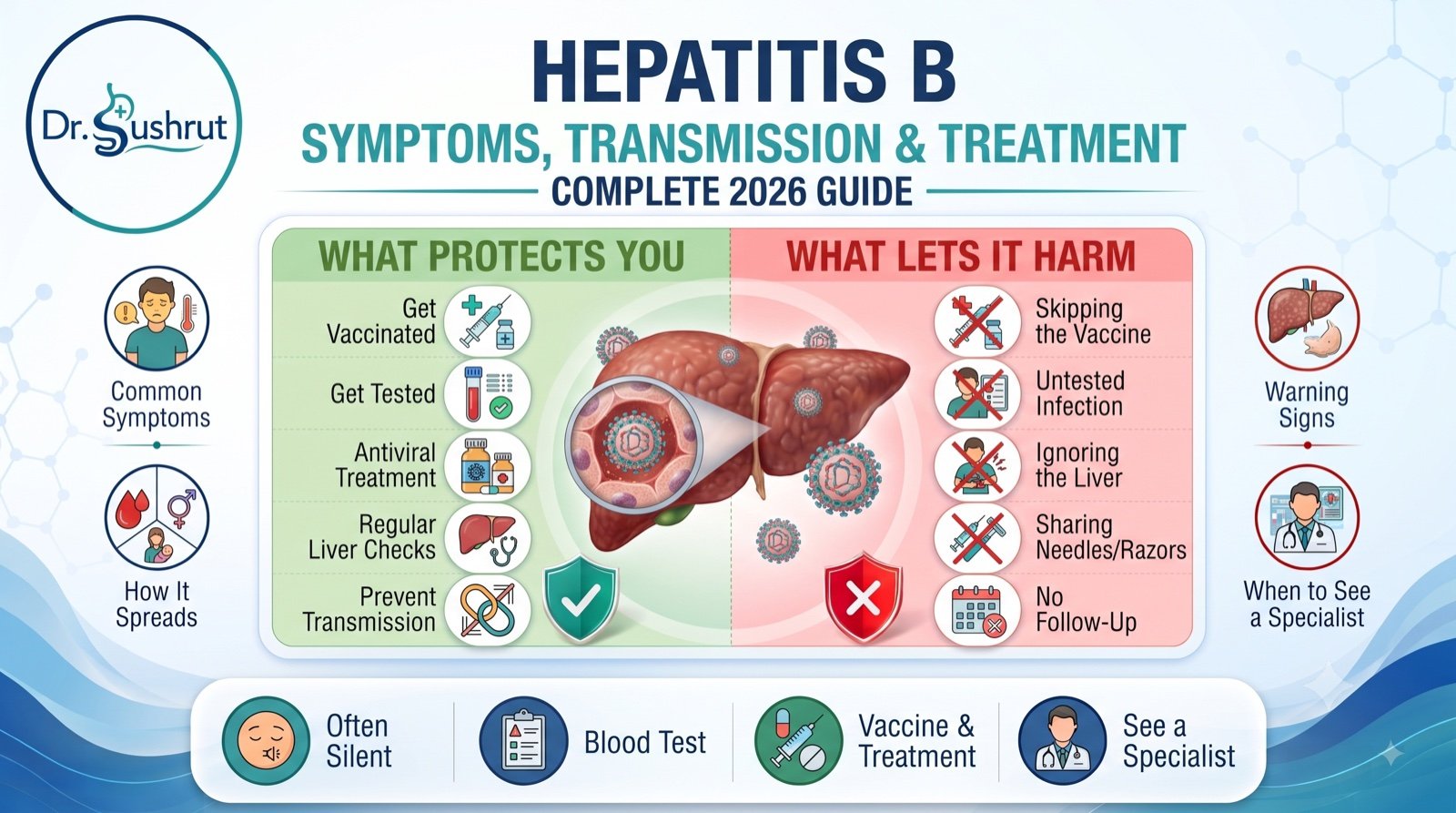
Hepatitis B is one of the most common serious liver infections in the world, and one of the very few that is both preventable by a vaccine and, in most people, entirely silent until the liver is already damaged. Many carry it for years without knowing, picked up around birth or in early childhood, only to discover it on a routine blood test or a blood donation. Because it can quietly lead to cirrhosis or liver cancer over decades, understanding how it spreads, who should be tested, and why the vaccine matters is genuinely important. A clear global overview is available from the World Health Organization.
This guide, written to reflect how a DM Gastroenterology specialist approaches hepatitis B, explains what it is, how it actually spreads (and how it does not), the symptoms, who should be vaccinated and tested, and how chronic infection is treated.
Key Takeaways
- Hepatitis B is a viral infection of the liver that can be short-lived (acute) or long-term (chronic).
- It spreads through blood and body fluids – at birth from mother to baby, through unsafe injections or blood, and through unprotected sex – not through sharing food or casual contact.
- Chronic infection is often silent for years but can lead to cirrhosis and liver cancer, which is why testing matters.
- A safe, effective vaccine prevents hepatitis B, and newborn vaccination is especially important.
- Chronic hepatitis B cannot always be cured, but effective antiviral treatment controls the virus and protects the liver.
What is hepatitis B?
Hepatitis B is caused by a virus that infects the liver and provokes inflammation. In some people the immune system clears it within months; in others – particularly those infected as babies or young children – it settles in for life as a chronic infection.
Hepatitis B – a liver infection caused by the hepatitis B virus, spread through blood and body fluids. It can be acute and self-limiting, or become a chronic, lifelong infection that slowly damages the liver unless it is monitored and, where needed, treated.
The danger of chronic hepatitis B is its silence. It can inflame the liver for decades with no symptoms, which is why it is a leading cause of the early signs of liver damage going unnoticed until scarring is advanced. Finding it early, through testing, is what allows that slow damage to be prevented.
How hepatitis B spreads – and how it does not
A great deal of unnecessary fear comes from misunderstanding how hepatitis B is passed on. It spreads through blood and certain body fluids: from an infected mother to her baby at birth, which is the commonest route in this region; through unsafe injections, unscreened blood, or shared needles and razors; and through unprotected sex. It does not spread through sharing meals, water, utensils, hugging, or everyday contact. This distinction matters, because people living with hepatitis B are often wrongly stigmatised, when the practical steps to prevent transmission – vaccination of close contacts and safe medical practices – are straightforward.
Symptoms of hepatitis B
Most people with chronic infection have no symptoms for years. When an acute infection does cause them, they can include:
- Tiredness, poor appetite, nausea and vague abdominal discomfort.
- Yellowing of the eyes and skin (jaundice), dark urine and pale stools.
- Joint aches and a general flu-like feeling.
- In chronic infection, often nothing at all until liver damage is advanced.
Because chronic hepatitis B is usually silent, the absence of symptoms is no reassurance – testing is the only way to know.
Warning signs that need urgent care
Seek prompt medical care for any of these
Deep jaundice with vomiting or severe tiredness
Confusion, drowsiness or disorientation
Swelling of the abdomen or legs
Vomiting blood, or black, tarry stoolThese can signal severe acute infection or advanced liver disease and need specialist assessment without delay.
Who should be tested and vaccinated
Testing is a simple blood test and is worthwhile for anyone at higher risk: family or household members of someone with hepatitis B, people whose mothers had it, healthcare workers, those who have had unscreened transfusions or unsafe injections, and anyone with an abnormal liver test. Pregnant women are tested so that an infected mother’s baby can be protected at birth. Vaccination, meanwhile, is the cornerstone of prevention: newborns should be vaccinated – ideally starting within a day of birth – and the vaccine is recommended for unvaccinated children and at-risk adults, including the close contacts of anyone infected. Testing before vaccination is sometimes advised so that existing infection or immunity is known.
| Step | What it involves | Why it matters |
|---|---|---|
| Blood test | Checks for active infection and immunity | The only way to detect silent chronic infection |
| Vaccination | A safe, effective course of injections | Prevents infection; vital for newborns and contacts |
| Monitoring | Regular liver tests and scans if infected | Catches liver damage or cancer early |
Treatment: controlling the virus and protecting the liver
Acute hepatitis B in adults often clears on its own with supportive care, and most do not need antiviral drugs. Chronic hepatitis B is different: it cannot always be cured, but it can be very well controlled. Not everyone with chronic infection needs medication immediately – the decision depends on how active the virus is and how much it is affecting the liver, judged from blood tests, viral levels and the degree of liver scarring. When treatment is needed, modern antiviral tablets suppress the virus effectively, reduce inflammation, and lower the risk of cirrhosis and liver cancer, usually taken long term. Everyone with chronic hepatitis B benefits from regular monitoring, including periodic scans to screen for liver cancer, and it is important to keep that follow-up going even while feeling completely well. Because the decisions are individual, anyone who tests positive should be assessed by a specialist rather than left unmonitored.
Hepatitis B and hepatitis C are often confused, but they differ in how they spread and how they are treated; this guide to hepatitis B versus hepatitis C explains the key differences.
Future trends in hepatitis B care
The global goal is to eliminate hepatitis B as a public health threat, and progress is real. Widespread newborn vaccination is steadily reducing new infections, better monitoring is helping specialists decide exactly who needs treatment and when, and a major research effort is under way toward a genuine cure that could one day clear the virus rather than only suppress it. For now, the combination of vaccination, testing and effective antiviral treatment already prevents the great majority of the serious harm hepatitis B can cause.
Conclusion
Hepatitis B is common, largely preventable, and usually silent – a combination that makes testing and vaccination so valuable. It spreads through blood and body fluids, not casual contact, so there is no reason for stigma, only for sensible prevention. If you have a family history, an abnormal liver test, or have never been vaccinated, a simple blood test and the vaccine are among the most worthwhile steps you can take for your liver.
Tested positive for hepatitis B, or unsure of your status?
Dr. Sushrut Singh, a DM Gastroenterology specialist, interprets hepatitis B tests, decides whether antiviral treatment is needed, arranges the monitoring that protects the liver, and advises on vaccinating close contacts. Consultations are at the Gaur City clinic in Greater Noida West, with investigations available at Fortis Hospital, Sector 62.
Call or WhatsApp +91 93153 54431 to have hepatitis B assessed. A silent infection is best found early.
Frequently Asked Questions (FAQs)
Is hepatitis B curable?
Acute hepatitis B often clears on its own in adults. Chronic hepatitis B cannot always be cured, but antiviral treatment controls the virus very effectively and protects the liver, and research toward a complete cure is ongoing.
How does hepatitis B spread?
Through blood and body fluids – from mother to baby at birth, through unsafe injections, shared needles or razors and unscreened blood, and through unprotected sex. It does not spread through sharing food, water, utensils or casual contact.
Can I live a normal life with hepatitis B?
Yes. With regular monitoring and treatment when needed, most people with chronic hepatitis B live full, healthy lives. Keeping up specialist follow-up, even while feeling well, is what protects the liver over the long term.
Who should get the hepatitis B vaccine?
All newborns should be vaccinated, ideally within a day of birth, along with unvaccinated children and at-risk adults – including household contacts of an infected person, healthcare workers and anyone advised by their doctor.
Does hepatitis B always damage the liver?
Not always, but chronic infection can slowly cause cirrhosis or liver cancer over many years if it is not monitored. Regular checks and treatment when needed greatly reduce that risk, which is why knowing your status matters.