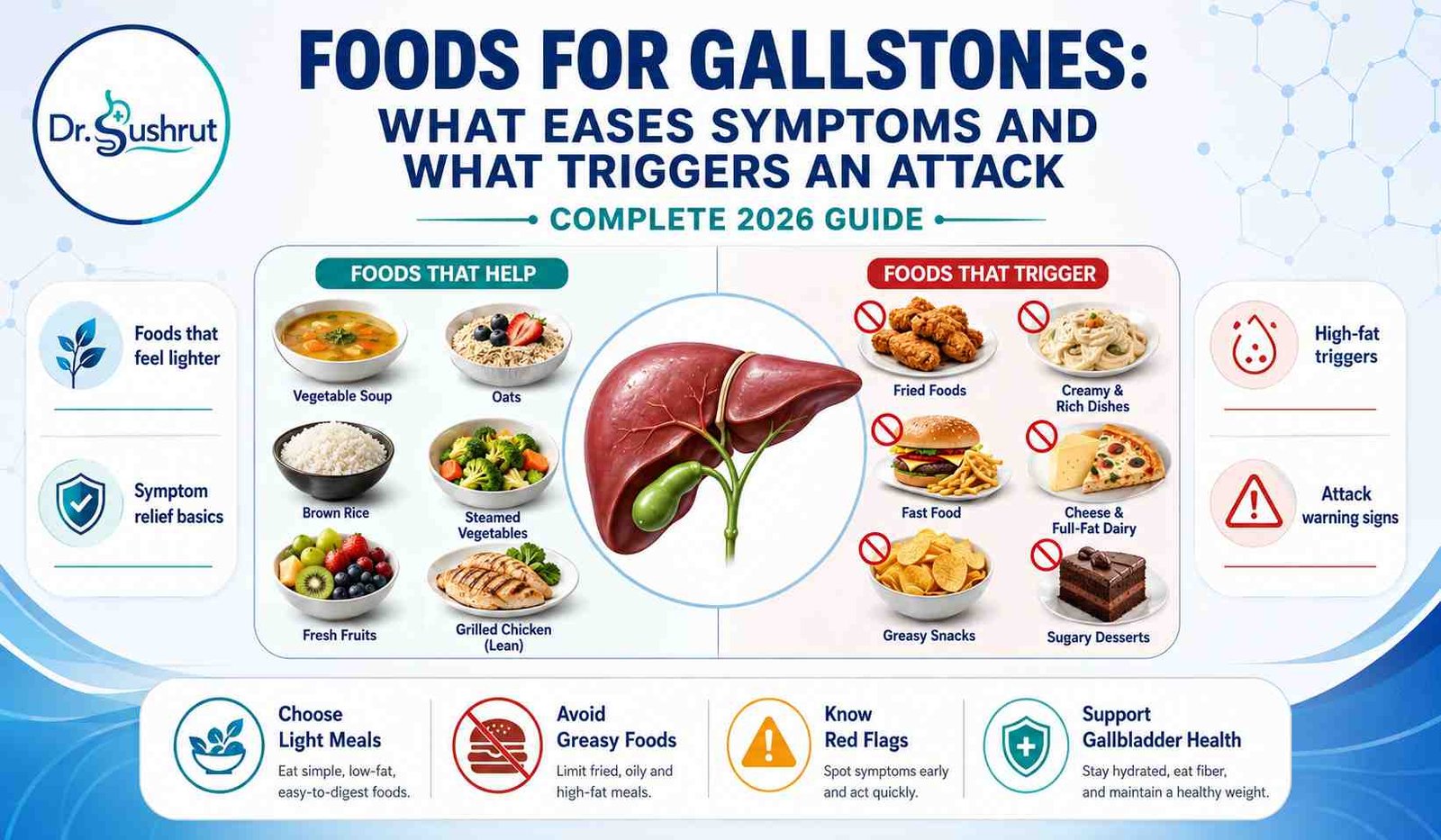
If you have been diagnosed with gallstones, the standard advice you probably received was vague and unhelpful: “avoid fatty foods.” Meanwhile, your family friend swears by turmeric water, your aunt insists on olive oil and lemon “gallbladder flushes,” and your search results contradict each other. Which foods actually trigger gallstone attacks? Which ones ease symptoms? And why does rapid weight loss, which sounds healthy, actually cause more gallstones? According to research published in the Indian Journal of Gastroenterology on Springer, gallstone disease affects an estimated 4-6 percent of the Indian population, with prevalence particularly high in North India and among women over 40. Dietary patterns are among the strongest modifiable risk factors.
This guide separates dietary myths from evidence-based food recommendations for gallstone patients. It tells you which specific foods to remove, which are safe to keep, and which timing choices matter. If you have known gallstones or have had an attack in the past 6 months, this guide will help you make daily eating decisions that reduce your risk of the next attack.
Key Takeaways
- Sudden high-fat meals are the most common trigger for gallstone attacks
- Rapid weight loss (crash diets, bariatric surgery) increases gallstone formation
- Fiber, plant proteins, and healthy fats reduce attack frequency
- “Olive oil and lemon gallbladder flush” is a myth – can trigger attacks
- Definitive treatment for symptomatic gallstones is surgical, not dietary
What Gallstones Actually Are
Gallstones are solid deposits that form in the gallbladder from cholesterol, bile pigments, or a mixture. About 80 percent of gallstones in Indian patients are cholesterol stones formed when bile becomes supersaturated with cholesterol. Diet influences bile composition, gallbladder emptying frequency, and cholesterol absorption. However, once stones have formed, no diet dissolves them. Diet can only reduce attack frequency and slow the formation of new stones.
Most Indian patients believe strict dieting can dissolve gallstones. This is medically incorrect. What diet can do is significant, but limited to prevention of new stones and reduction of attack frequency in existing disease.
Foods for Gallstones Fact-Check
| Food or Practice | What It Does | Verdict |
|---|---|---|
| Sudden fried heavy meal | Triggers strong gallbladder contraction | Common attack trigger |
| Ghee-heavy sweets (large portions) | Cholesterol load + strong contraction | High trigger risk |
| Refined carbs and sugar | Raises bile cholesterol saturation | Increases new stone formation |
| Whole grains, fiber-rich foods | Reduce cholesterol absorption | Genuinely helpful |
| Nuts (moderate portions) | Reduce gallstone risk in studies | Protective |
| Coffee (unsweetened) | Stimulates regular gallbladder emptying | Protective |
| Plant-based protein (dal, tofu) | Lower saturated fat than red meat | Helpful |
| Olive oil in cooking | Healthy fat, does not trigger stones | Safe |
| “Olive oil + lemon flush” | Marketed as stone remover | Myth; can trigger attack |
| Rapid weight loss diets | Bile stasis increases stone formation | Backfires |
| Skipping meals | Bile stagnates in gallbladder | Increases stone formation |
| Very low-fat diet long-term | Gallbladder stops emptying properly | Backfires |
| High-fructose drinks | Raise bile cholesterol | Actively harmful |
| Excess red meat | Saturated fat load | Increases attack risk |
| Regular curd or yogurt | Provides probiotics, safe | Helpful |
| Turmeric in food (not supplements) | Anti-inflammatory in cooking amounts | Safe |
| Bariatric surgery (rapid loss) | Increases stone formation risk 3-5x | Well-documented risk |
| Regular small meals | Keep bile flowing | Protective pattern |
The centerpiece insight is that gallstone attacks are triggered by two very different mechanisms: acute strong contractions (from heavy fatty meals) and stagnant bile (from skipping meals or crash dieting). Most patients focus only on the first mechanism and miss the second. Skipping breakfast is as much a trigger as eating fried food. If you have symptomatic gallstones, understanding both mechanisms matters as much as knowing the specific triggers. For any recurrent right-upper-abdomen pain lasting more than 30 minutes, a proper evaluation by a gastroenterologist in Gaur City Greater Noida is important because the safest long-term treatment for symptomatic gallstones is surgical rather than dietary control.
Why Rapid Weight Loss Causes More Gallstones
This is one of the most counter-intuitive facts in gallstone medicine. Losing weight quickly, whether through crash dieting, very low-calorie diets, or bariatric surgery, increases gallstone formation dramatically.
The mechanism: Rapid mobilization of body fat releases large amounts of cholesterol into bile. Simultaneously, low food intake means the gallbladder does not contract regularly. Cholesterol-supersaturated bile sits stagnant, and stones form quickly.
The numbers: Studies show 30-70 percent of patients undergoing rapid weight loss develop new gallstones within 6-12 months. This is why bariatric surgery centers often perform preventive gallbladder removal or start ursodeoxycholic acid.
The lesson for regular patients: Weight loss for gallstone patients should be gradual, at 0.5-1 kg per week. Crash diets are counterproductive.
Foods That Genuinely Reduce Gallstone Risk
Whole grains: Oats, bajra, jowar, brown rice. Fiber binds cholesterol and reduces reabsorption. Aim for at least half of daily grain intake to be whole grain.
Plant proteins: Dals, chickpeas, tofu, sprouts. Lower saturated fat than meat while providing complete nutrition.
Nuts in moderation: One handful of almonds, walnuts, or pistachios daily. Studies show 25 percent reduction in gallstone risk.
Coffee (2-3 cups unsweetened): Stimulates the gallbladder to empty regularly, preventing bile stagnation.
Fish (grilled, not fried): Omega-3 content is protective. Rohu, hilsa, salmon 2-3 times weekly.
Green leafy vegetables: Fiber and phytonutrients. One large serving daily minimum.
Fruits (whole, not juices): Especially citrus, berries, and apples. Fructose from whole fruits is safe, unlike from packaged drinks.
For patients with symptomatic gallstones or a history of attacks, dietary adjustments help reduce recurrence but are not a substitute for definitive treatment. Understanding gallbladder stone surgery cost in Noida allows patients to plan the transition from dietary management to surgical solution when appropriate.
💬 Recurrent Attacks? Diet Won’t Fix Structural Stones
Once gallstones are causing symptoms, diet reduces attack frequency but does not remove the underlying stones. Dr. Sushrut Singh (DM Gastroenterology) can evaluate whether your case needs surgical intervention now or can be managed conservatively.
Meal Timing Matters as Much as Food Choice
Eat regular meals: 3 structured meals plus 1-2 small snacks. Prevents bile stagnation better than 2 large meals or intermittent fasting.
Do not skip breakfast: Overnight fasting already stagnates bile. Skipping breakfast extends this and increases attack risk.
Space meals evenly: 4-5 hours between meals is ideal. Longer gaps allow bile concentration.
Small last meal early: A large late dinner leaves the gallbladder full overnight. Aim for dinner by 8 PM.
Avoid intermittent fasting protocols: 16-hour fasts increase gallstone attack risk in patients with existing stones. Not suitable for gallstone patients.
Small snacks are protective: A handful of nuts or a fruit between meals keeps bile flowing.
When Diet Is Not Enough
| Situation | What It Indicates | Action Needed |
|---|---|---|
| Recurrent attacks despite diet | Symptomatic gallstones | Surgical evaluation |
| Any attack lasting more than 6 hours | Possible stone impaction | Emergency care |
| Attack with fever or jaundice | Cholangitis or cholecystitis | Emergency care |
| Attack with severe pain radiating to back | Possible pancreatitis | Emergency care |
| Common bile duct stones on imaging | Requires ERCP first | Urgent evaluation |
| Gallstones with diabetes | Higher complication risk | Consider early surgery |
| Multiple small stones | Higher CBD stone risk | Specialist review |
When common bile duct stones are found alongside gallbladder stones, the combined treatment is different from gallbladder surgery alone. Understanding the ERCP cost in Noida becomes relevant because bile duct stones need endoscopic removal before or during gallbladder surgery. Many patients discover CBD stones only during pre-surgical evaluation, and having a specialist who handles both ERCP and post-procedure surgical planning gives smoother, safer care than fragmented treatment across multiple centers.
Future Trends in Gallstone Management
Indian gastroenterology is moving toward earlier surgical intervention for symptomatic gallstones rather than years of dietary management. Single-incision laparoscopic surgery and robotic cholecystectomy are becoming available in select centers. Same-session ERCP plus laparoscopic surgery for combined disease reduces hospital stays. Preventive strategies for patients undergoing rapid weight loss (medications, planned monitoring) are becoming standard.
Conclusion
Gallstone dietary management is real but limited. Foods can reduce attack frequency and slow new stone formation, but cannot dissolve existing stones. The two main mechanisms of attack (heavy fatty meals and bile stagnation from skipped meals or rapid weight loss) both need to be addressed. Regular structured meals with adequate fiber, plant protein, and moderate healthy fats are the practical approach. If you are having recurrent attacks, dietary control alone is not the right long-term answer. Surgical removal of the gallbladder is safe, definitive, and eliminates the risk of dangerous complications like acute cholecystitis and gallstone pancreatitis.
🛒 Gallstone Attack Prevention Grocery List
Use this two-column list next time you shop:
✅ Stock These (Safe/Protective)
|
🚫 Avoid or Limit (Trigger Foods)
|
Following this pattern reduces attack frequency but does not remove existing stones. Symptomatic patients still need surgical evaluation.
📍 Book Consultation at Either Location
|
Gaur City Clinic Greater Noida West 📞 Call: +91 93153 54431 💬 WhatsApp Now 📍 View on Google Maps |
Fortis Hospital Sector 62 📞 Call: +91 93153 54431 💬 WhatsApp Now 📍 View on Google Maps |
Frequently Asked Questions
Does olive oil and lemon “flush” really dissolve gallstones?
No. This is one of the most persistent internet myths in gallstone care. The green pellets that appear in stool after these flushes are saponified oil, not gallstones. The procedure has no scientific basis and can actively trigger a gallbladder attack in patients with existing stones because it forces strong contraction. In some cases, this leads to stone impaction requiring emergency care.
Can I ever eat ghee again with gallstones?
Small amounts of ghee (1 teaspoon in cooking) are usually well tolerated even with gallstones. The trigger is large amounts of concentrated fat consumed suddenly. A meal with 4-5 tablespoons of ghee or a full plate of ghee-heavy sweets is far more likely to trigger an attack than a normal roti made with a teaspoon of ghee. Moderation and portion control matter more than complete avoidance.
Is surgery necessary if I have no symptoms?
Not always. Silent gallstones found incidentally on ultrasound in patients with no pain generally do not need surgery unless there are risk factors like diabetes, very large stones, gallbladder polyps, or porcelain gallbladder. However, once symptoms begin, the risk of complications rises and surgical evaluation becomes appropriate. Discuss your specific case with a specialist rather than following generic advice.