
The FibroScan report says E 9.1 kPa, CAP 296 dB/m, IQR/med 14%, and two charts found online do not agree on what that means. Most of these scans are for fatty liver, now very common: a review in Clinical and Molecular Hepatology notes that fatty liver in Asia rose from 25% of people between 1999 and 2005 to 34% between 2012 and 2017.
This guide reads the report line by line: the normal range for stiffness and fat, how the numbers map to stages F0 to F4 and grades S0 to S3, whether a reading is reliable, and what pushes it up falsely. Cut-offs differ between diseases and studies, so a FibroScan result is always read with blood tests, an ultrasound and the history.
Key Takeaways
- FibroScan gives two main numbers: liver stiffness (E, in kPa) for scarring and CAP (in dB/m) for fat.
- In fatty liver, a UK biopsy study set cut-offs of 8.2 kPa (F2), 9.7 kPa (F3) and 13.6 kPa (F4).
- A CAP below 248 dB/m usually means little or no fat; 280 dB/m and above points to S3.
- A reading is treated as reliable when there are at least 10 valid measurements and the IQR/median is 30% or less.
- A recent meal, active hepatitis, heart failure and blocked bile flow can raise stiffness without added scarring.
What the numbers on a FibroScan report mean
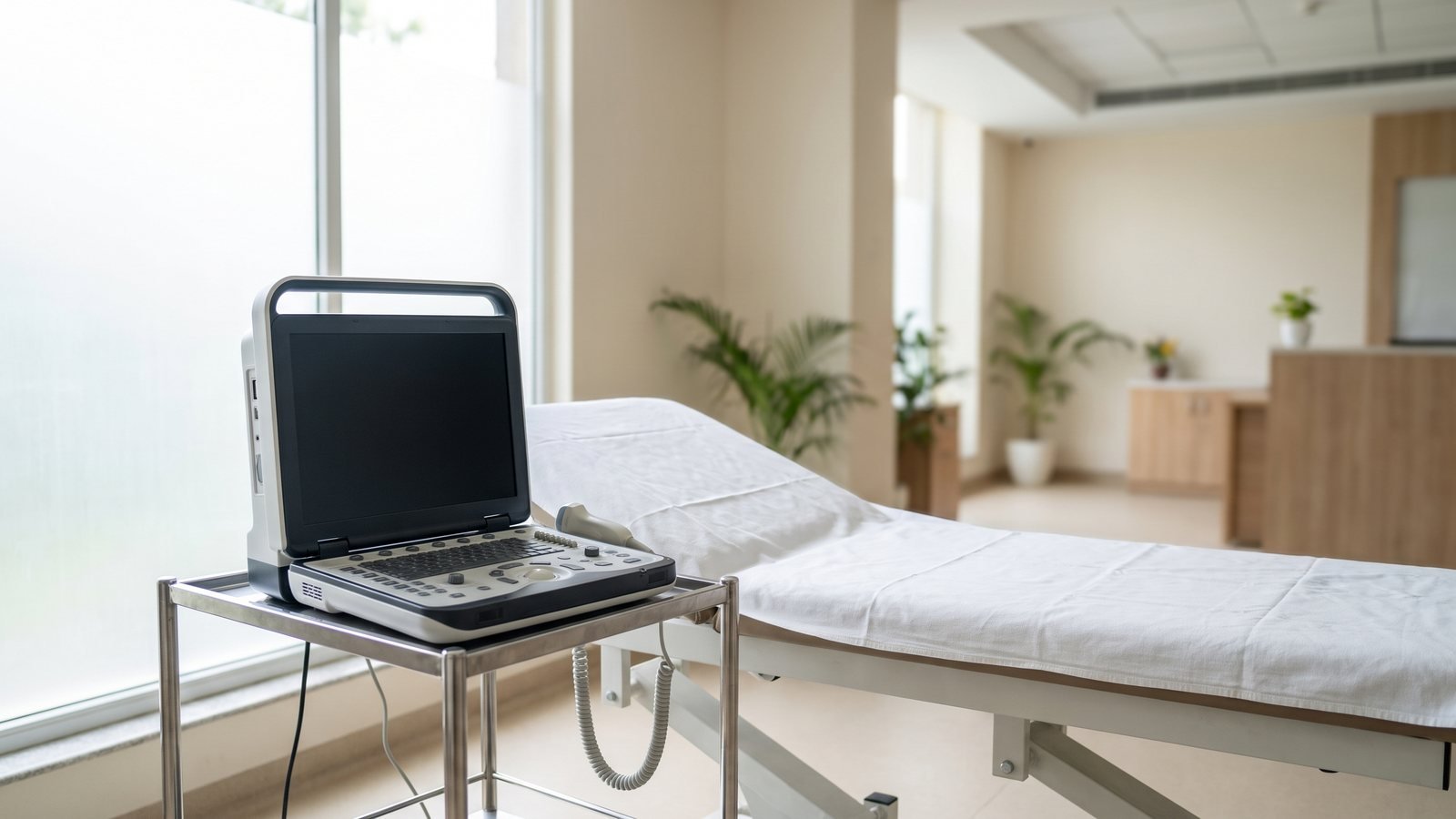
Definition: FibroScan (vibration-controlled transient elastography) is a non-invasive, ultrasound-based test. A probe sends a gentle vibration into the liver and times how fast it travels: the stiffer the liver, the faster the wave. Stiffness is printed as E, in kilopascals (kPa), and reflects scarring, called fibrosis. CAP (controlled attenuation parameter, in dB/m) measures how much the ultrasound signal weakens as it passes through fat.
Stiffness values run from 1.5 to 75 kPa; lower means a more elastic liver. The report shows a median, the middle value of all valid readings, so one odd reading does not distort the result. For who needs the scan and how it is done, see how the FibroScan test works and who needs one.
FibroScan score chart (kPa): fibrosis stages F0 to F4
Fibrosis is graded from F0 (no scarring) to F4 (cirrhosis). The bands below come from a study of 450 adults with suspected fatty liver at seven UK centres, each of whom also had a liver biopsy (Gastroenterology, 2019). They apply to fatty liver disease (also called NAFLD, now renamed MASLD), not to every liver condition.
| Liver stiffness (E) | Fibrosis stage it suggests | In plain words |
|---|---|---|
| Below 8.2 kPa | F0 to F1 | No scarring, or only mild scarring |
| 8.2 to 9.6 kPa | F2 | Significant fibrosis, worth acting on |
| 9.7 to 13.5 kPa | F3 | Advanced (bridging) fibrosis |
| 13.6 kPa and above | F4 | Cirrhosis likely |
So, in fatty liver, a liver stiffness below 8.2 kPa makes significant scarring (F2 or worse) unlikely. It does not rule out mild F1 scarring, which this band also includes.
Why charts online disagree. Across fatty liver studies, the F2 cut-off ranges from 6.2 to 11 kPa, F3 from 8 to 12 kPa and F4 from 9.5 to 20 kPa. In hepatitis B, people whose SGPT (ALT) is one to five times the upper limit of normal show higher stiffness than those with normal ALT, so hepatitis B charts differ from fatty liver charts.
A reading near a boundary, such as 9.5 or 9.9 kPa, is a grey zone. The specialist then weighs blood-based scores, platelets and the ultrasound, and occasionally suggests a biopsy; how FibroScan compares with a liver biopsy explains that trade-off.
FibroScan CAP score: fat grades S0 to S3
The CAP cut-offs most often quoted come from a pooled analysis of 2,735 patients (Journal of Hepatology, 2017).
| CAP (dB/m) | Fat grade | Share of liver cells with fat |
|---|---|---|
| Below 248 | S0 | Little or none |
| 248 to 267 | S1 (mild) | About 5% up to a third |
| 268 to 279 | S2 (moderate) | About a third to two-thirds |
| 280 and above | S3 (severe) | More than two-thirds |
CAP shifts with the person scanned: in that analysis it rose by about 4.4 dB/m per unit of BMI, and by about 10 dB/m with fatty liver disease or diabetes. Studies in heavier European groups use higher cut-offs; the UK study above settled on 302, 331 and 337 dB/m for S1, S2 and S3. A high CAP confirms fat, but fibrosis stage is what is most closely tied to long-term liver outcome.
IQR and median: is the reading reliable?
The machine takes at least 10 valid measurements at one spot. IQR (interquartile range) shows how spread out they were; IQR/med expresses that spread as a percentage of the median. The manufacturer’s reliability rule is an IQR/median of 30% or less whenever stiffness is above 7.1 kPa. For CAP, one study linked an IQR above 40 dB/m with a less dependable fat grade, though the data conflict.
So check three things: 10 or more valid measurements, IQR/med of 30% or less, and the probe used. If any is off, the result is better repeated than acted on; FibroScan test cost and what affects it covers the practical side of a repeat.
What can push a FibroScan reading up falsely
- A recent meal. Stiffness rises by 1 to 5 kPa after eating, peaks at 20 to 40 minutes and may stay raised at 180 minutes. Echosens asks for at least 3 hours of fasting, clear fluids allowed. Morning chai with biscuits counts as a meal.
- Active hepatitis or high ALT. Acute viral hepatitis and flares of hepatitis B or C raise stiffness sharply. In fatty liver, a raised SGPT does not appear to have the same effect.
- Heart failure. When blood backs up into the liver, the congested liver reads stiff.
- Blocked bile flow (cholestasis). A stone or narrowing in the bile duct raises stiffness regardless of scarring.
- Obesity and the probe. The M probe suits average adults and XL heavier builds; XL reads lower in the same person. The device picks the probe by skin-to-liver distance, not BMI, and with the right probe the same cut-offs apply.
What FibroScan cannot tell you
- The cause. Alcohol, metabolic fatty liver, hepatitis B or C and autoimmune disease can give the same stiffness.
- Liver function. That comes from bilirubin, albumin, INR and platelets, not from kPa.
- Inflammation versus scarring. One reading cannot separate the two.
- Lumps, stones or cancer. An ultrasound or CT shows those.
When to repeat a FibroScan
Repeat before acting if the scan was not done fasting, failed the reliability checks above, or was done during a hepatitis flare or jaundice; in that case the repeat waits until ALT and bilirubin settle.
For low-risk results, European and Latin American guidelines suggest re-assessment by a blood score or FibroScan at about 3-year intervals. F2 to F4 readings are followed more closely, at an interval the treating doctor sets. For F4, the Baveno VI consensus states that stiffness below 20 to 25 kPa with a platelet count of 1.5 lakh or more makes varices needing treatment unlikely, which may spare a screening endoscopy. Tracking change with FibroScan still needs confirmation from paired biopsy studies; when repeating, keep the same probe and fast beforehand.
What’s changing in liver scans
Newer FibroScan models can also measure spleen stiffness, which helps assess pressure in the liver’s blood supply in advanced disease. The MASLD renaming has brought pathways pairing a blood score with FibroScan, and the first medicines for MASH, the inflamed form of fatty liver, have been approved in some countries.
Conclusion
In fatty liver disease, the usual normal range is a stiffness below 8.2 kPa, which makes significant scarring unlikely, and a CAP below 248 dB/m. Both are trusted only when the scan was fasting and passed the reliability checks. Numbers near a cut-off need context, not alarm.
Bring your FibroScan report If the report shows stiffness of 8.2 kPa or more, CAP in the S2 or S3 range, or IQR/med above 30%, a consultation can read it alongside your blood tests and ultrasound. Dr Sushrut Singh, a gastroenterologist with a DM from ILBS, New Delhi, consults at Fortis Hospital, Sector 62, Noida, and at his clinic in Gaur City 2, Greater Noida West. Call or WhatsApp 093153 54431 and bring the report with recent LFT and ultrasound results.
Frequently Asked Questions (FAQs)
What is a normal FibroScan score?
In fatty liver disease, a stiffness below 8.2 kPa (F0 to F1) and a CAP below 248 dB/m (S0). Other liver diseases use different cut-offs.
Is 7 kPa on FibroScan normal?
In fatty liver, 7 kPa sits below the 8.2 kPa cut-off for significant fibrosis, so significant scarring is unlikely. It is still read with the IQR/med figure and your blood tests.
My CAP score is high but stiffness is normal. Should I worry?
It means fat without measurable scarring, the stage where weight loss, activity and diabetes control help most.
Can a FibroScan score come down?
It can, for example after a hepatitis flare settles or with sustained weight loss, but no change can be promised; small shifts may be test variation.